
Benjamin Disraeli
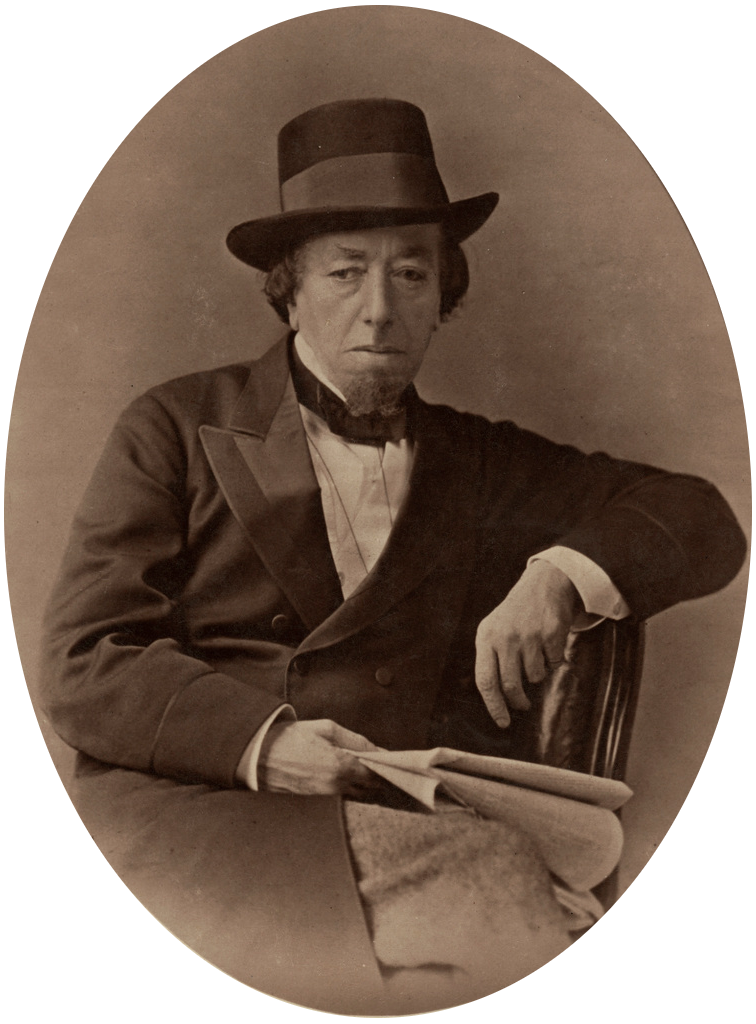
0 sources
Summary
Benjamin Disraeli was born in London[1]. He died in Mayfair[2]. He worked as a politician[3], novelist[4], writer[5], biographer[6], and finance minister[7]. He ranks in the top 0.45% of human entities by monthly Wikipedia readership (26,033 views/month, #4,496 of 1,000,298).[8]
Key Facts
- Place of death: Curzon Street[9], London[10]
- Place of burial: St Michael and All Angels Churchyard[11]
- Father: Isaac D'Israeli[12]
- Mother: Mary Basevi[13]
- Spouse: Mary Anne Disraeli[14]
- Country of citizenship: United Kingdom of Great Britain and Ireland[15]
- Ethnic group: Sephardi Jews[16]
- Field of work: literary activity[17], political activity[18]
- Position held: Prime Minister of the United Kingdom[19], Leader of the Opposition[20], Chancellor of the Exchequer[21], member of the House of Lords[22], member of the 21st Parliament of the United Kingdom[23], member of the 20th Parliament of the United Kingdom[24], member of the 19th Parliament of the United Kingdom[25], member of the 18th Parliament of the United Kingdom[26], member of the 17th Parliament of the United Kingdom[27], member of the 16th Parliament of the United Kingdom[28], member of the 15th Parliament of the United Kingdom[29], member of the 14th Parliament of the United Kingdom[30], member of the 13th Parliament of the United Kingdom[31], Leader of the House of Lords[32]
- Employer: University of Glasgow[33]
- Educated at: St Piran's School[34]
- Award received: Fellow of the Royal Society[35], Knight of the Garter[36]
- Member of: Royal Society[37], Société de l’histoire de France[38]
- Religion or worldview: Anglicanism[39], Judaism[40], Christianity[41]
- Sex or gender: male[42]
- Noble title: viscount[43], Earl of Beaconsfield[44], Viscount Hughenden[45]
- Member of political party: Conservative Party[46]
- Commons category: Benjamin Disraeli[47]
- Archives at: National Library of Wales[48]
- Honorific prefix: The Right Honourable[49]
Body
Works and Contributions
Things named for Benjamin Disraeli include Beaconsfield[50], a suburb[51], in Australia[52].
Why It Matters
Benjamin Disraeli has Wikipedia articles in 30 language editions, a strong signal of global cultural recognition.[53] He is known by 80 alternative names across languages and contexts.[54]
He has been cited as an influence by Edward Bulwer-Lytton[55], a playwright[56], 1803–1873[57], of United Kingdom of Great Britain and Ireland[58], awarded the Chancellor's Gold Medal[59], specialised in creative and professional writing[60].
Works attributed to him include Sybil[61], a literary work[62] and Tancred[63], a literary work[64]. Entities named for him include Beaconsfield[50], a suburb[51], in Australia[52].
FAQs
Where was Benjamin Disraeli born?
Benjamin Disraeli was born in London[1].
Where did Benjamin Disraeli die?
Benjamin Disraeli passed away in Mayfair[2].
Who were Benjamin Disraeli's parents?
Benjamin Disraeli's father was Isaac D'Israeli[12]. Benjamin Disraeli's mother was Mary Basevi[13].
Who was Benjamin Disraeli married to?
Benjamin Disraeli's spouses include Mary Anne Disraeli[14].
What did Benjamin Disraeli do for work?
Benjamin Disraeli worked as a politician[3], novelist[4], writer[5], biographer[6], and finance minister[7].
Where did Benjamin Disraeli go to school?
Benjamin Disraeli was educated at St Piran's School[34].
What awards did Benjamin Disraeli receive?
Honors received include Fellow of the Royal Society[35] and Knight of the Garter[36].
Who did Benjamin Disraeli influence?
Benjamin Disraeli has been cited as an influence by Edward Bulwer-Lytton[55].