
Belousov–Zhabotinsky reaction
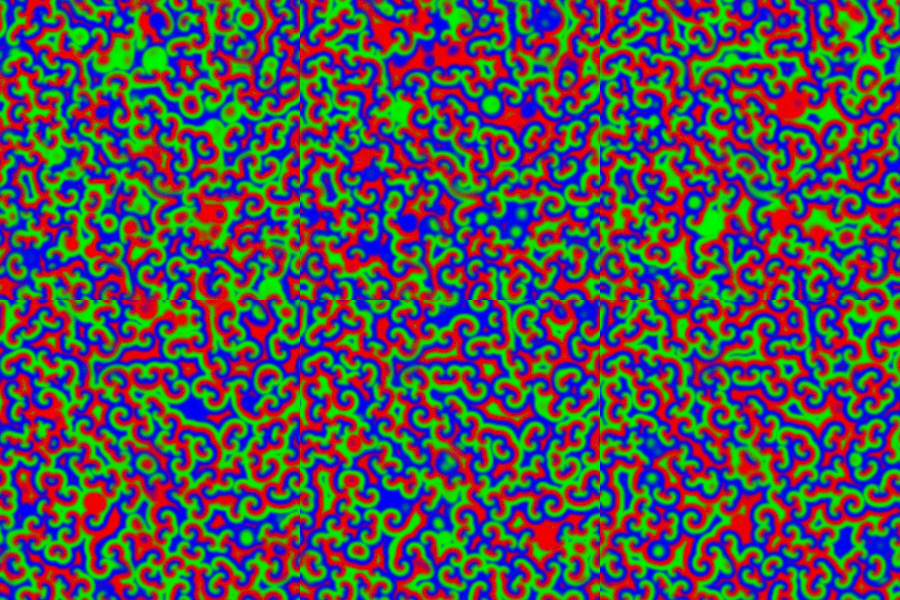
0 sources
Belousov–Zhabotinsky reaction
Summary
Belousov–Zhabotinsky reaction is an eponymous chemical reaction[1]. It ranks in the top 2% of eponymous_chemical_reaction entities by monthly Wikipedia readership (922 views/month).[2]
Key Facts
- Belousov–Zhabotinsky reaction's instance of is recorded as eponymous chemical reaction[3].
- Belousov–Zhabotinsky reaction's instance of is recorded as chemical clock[4].
- Boris Pavlovich Belousov is named after Belousov–Zhabotinsky reaction[5].
- Anatoly Zhabotinsky is named after Belousov–Zhabotinsky reaction[6].
- Belousov–Zhabotinsky reaction is a type of chemical reaction[7].
- Belousov–Zhabotinsky reaction's Commons category is recorded as Belousov-Zhabotinsky reaction[8].
- Belousov–Zhabotinsky reaction's time of discovery or invention is recorded as 1951[9].
- Belousov–Zhabotinsky reaction's topic's main category is recorded as Category:Belousov-Zhabotinsky reaction[10].
- Belousov–Zhabotinsky reaction's Commons gallery is recorded as Belousov-Zhabotinsky reaction[11].
- Belousov–Zhabotinsky reaction's manifestation of is recorded as self-exciting oscillation[12].
Body
Definition and Type
Recorded instance of include eponymous chemical reaction[3] and chemical clock[4]. Belousov–Zhabotinsky reaction is a type of chemical reaction[7].
Origins
Things named after include Boris Pavlovich Belousov[5], a chemist[13], 1893–1970[14], of Soviet Union[15], awarded the Lenin Prize[16], specialised in chemistry[17] and Anatoly Zhabotinsky[6], a physicist[18], 1938–2008[19], of Soviet Union[20], awarded the Lenin Prize[21], specialised in physical chemistry[22].
Why It Matters
Belousov–Zhabotinsky reaction ranks in the top 2% of eponymous_chemical_reaction entities by monthly Wikipedia readership (922 views/month).[2] It has Wikipedia articles in 21 language editions, a strong signal of global cultural recognition.[23] It is known by 41 alternative names across languages and contexts.[24]