
avatar
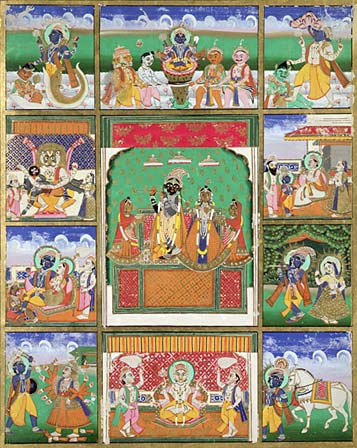
material appearance or incarnation of a deity on earth in Hinduism
Press Enter · cited answer in seconds
0 sources
Summary
avatar is a religious concept[1]. avatar ranks in the top 6% of religious concept entities by monthly Wikipedia readership (7,756 views/month).[2]
Key Facts
- Country: India[3]
- Subclass of: mythical character[4]
- Part of: Hinduism[5]
- Commons category: Avatar[6]
- Facet of: Hinduism[7]
- Described by source: Great Soviet Encyclopedia (1926–1947)[8], Brockhaus and Efron Encyclopedic Dictionary[9], The Nuttall Encyclopædia[10], Granat Encyclopedic Dictionary[11], Encyclopædia Britannica 11th edition[12], Otto's encyclopedia[13]
- Stack Exchange tag: https://hinduism.stackexchange.com/tags/avatars[14]
- Native label: अवतार[15]
- Different from: Avatar[16], Avatars[17]
- On focus list of Wikimedia project: Wikipedia:Vital articles/Level/4[18]
Body
Influence
Things named for avatar include Avatar[19], a film[20], directed by James Cameron[21].
Why It Matters
avatar has Wikipedia articles in 30 language editions, a strong signal of global cultural recognition.[22] avatar is known by 54 alternative names across languages and contexts.[23]
Entities named for avatar include Avatar[19], a film[20], directed by James Cameron[21].