
Arnolfo di Cambio
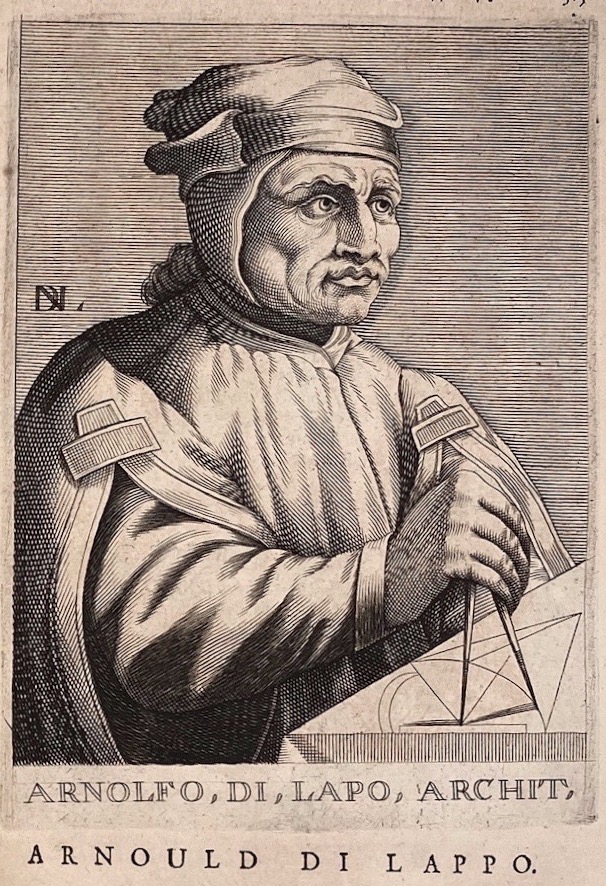
0 sources
Arnolfo di Cambio
Summary
Arnolfo di Cambio is a human[1]. Born in Colle di Val d'Elsa[2], he… he was born on January 1, 1240[3]. He passed away in Florence[4]. He died on March 8, 1302[5]. He worked as an architect[6], sculptor[7], and painter[8]. He has Wikipedia articles in 22 language editions, a strong signal of global cultural recognition.[9]
Key Facts
- Born in Colle di Val d'Elsa[2], Arnolfo di Cambio…
- Arnolfo di Cambio passed away in Florence[4].
- Arnolfo di Cambio was born on January 1, 1240[3].
- Arnolfo di Cambio was born on 1242[10].
- Arnolfo di Cambio died on March 8, 1302[5].
- Arnolfo di Cambio died on March 8, 1306[11].
- Arnolfo di Cambio held citizenship in Italy[12].
- Arnolfo di Cambio's professions included architect[6].
- Arnolfo di Cambio's professions included sculptor[7].
- Arnolfo di Cambio's professions included painter[8].
- Arnolfo di Cambio's field of work was art of sculpture[13].
- Arnolfo di Cambio's field of work was architecture[14].
- A notable work attributed to Arnolfo di Cambio is Dormition of the Virgin and double bust of two apostles[15].
- A notable work attributed to Arnolfo di Cambio is Madonna with Glass Eyes[16].
- A notable work attributed to Arnolfo di Cambio is Saint Peter[17].
- A notable work attributed to Arnolfo di Cambio is Basilica of Santa Croce[18].
- A notable work attributed to Arnolfo di Cambio is Florence Cathedral[19].
- A notable work attributed to Arnolfo di Cambio is Statue of Bonifacius VIII in the Palace of the Popes[20].
- Arnolfo di Cambio is recorded as male[21].
- Arnolfo di Cambio's instance of is recorded as human[22].
- Arnolfo di Cambio is associated with the Gothic art movement[23].
- Arnolfo di Cambio is associated with the Duecento movement[24].
- Arnolfo di Cambio is associated with the Proto-Renaissance movement[25].
- Arnolfo di Cambio's Commons category is recorded as Arnolfo di Cambio[26].
- Arnolfo di Cambio's given name is recorded as Arnolfo[27].
Body
Origins and Family
Born in Colle di Val d'Elsa[2], Arnolfo di Cambio… Recorded date of birth include January 1, 1240[3] and 1242[10].
Education
Arnolfo di Cambio studied under Nicola Pisano[28].
Career and Affiliations
Recorded occupations include architect[6], sculptor[7], and painter[8]. Fields of work include art of sculpture[13], a type of arts[29] and architecture[14], an academic discipline[30].
Works and Contributions
Notable works include Dormition of the Virgin and double bust of two apostles[15], a group of sculptures[31], founded in 1300[32]; Madonna with Glass Eyes[16], a marble sculpture[33], founded in 1300[34]; Saint Peter[17], a bronze sculpture[35], in Vatican City[36], founded in 1290[37]; Basilica of Santa Croce[18], a minor basilica[38], in Italy[39], founded in 1294[40]; Florence Cathedral[19], a minor basilica[41], in Italy[42], founded in 1296[43]; and Statue of Bonifacius VIII in the Palace of the Popes[20], a statue[44], in Italy[45].
Death and Burial
Recorded date of death include March 8, 1302[5] and March 8, 1306[11]. Arnolfo di Cambio died in Florence[4].
Why It Matters
Arnolfo di Cambio has Wikipedia articles in 22 language editions, a strong signal of global cultural recognition.[9] He is known by 21 alternative names across languages and contexts.[46]
FAQs
Where was Arnolfo di Cambio born?
Arnolfo di Cambio was born in Colle di Val d'Elsa[2].
Where did Arnolfo di Cambio die?
Arnolfo di Cambio passed away in Florence[4].
What did Arnolfo di Cambio do for work?
Arnolfo di Cambio worked as architect[6], sculptor[7], and painter[8].