
Apollo 16
fifth Moon landing and tenth crewed flight of the United States Apollo program
Press Enter · cited answer in seconds
0 sources
Apollo 16
Summary
Apollo 16 is a human spaceflight[1]. It ranks in the top 4% of human_spaceflight entities by monthly Wikipedia readership (3,671 views/month).[2]
Key Facts
- Apollo 16 is in the country of United States[3].
- Apollo 16's instance of is recorded as human spaceflight[4].
- Apollo 16 is operated by National Aeronautics and Space Administration[5].
- Apollo 16 followed Apollo 15[6].
- Apollo 16 was followed by Apollo 17[7].
- Apollo 16 is part of Apollo space program[8].
- Apollo 16's Commons category is recorded as Apollo 16[9].
- Apollo 16's space launch vehicle is recorded as Saturn V[10].
- Apollo 16's type of orbit is recorded as lunar orbit[11].
- Apollo 16's UTC date of spacecraft launch is recorded as April 16, 1972[12].
- Apollo 16's UTC date of spacecraft landing is recorded as April 27, 1972[13].
- Apollo 16's significant event is recorded as rocket launch[14].
- Apollo 16's significant event is recorded as surface exploration[15].
- Apollo 16's significant event is recorded as splashdown[16].
- Apollo 16's topic's main category is recorded as Category:Apollo 16[17].
- Apollo 16's Commons gallery is recorded as Apollo 16[18].
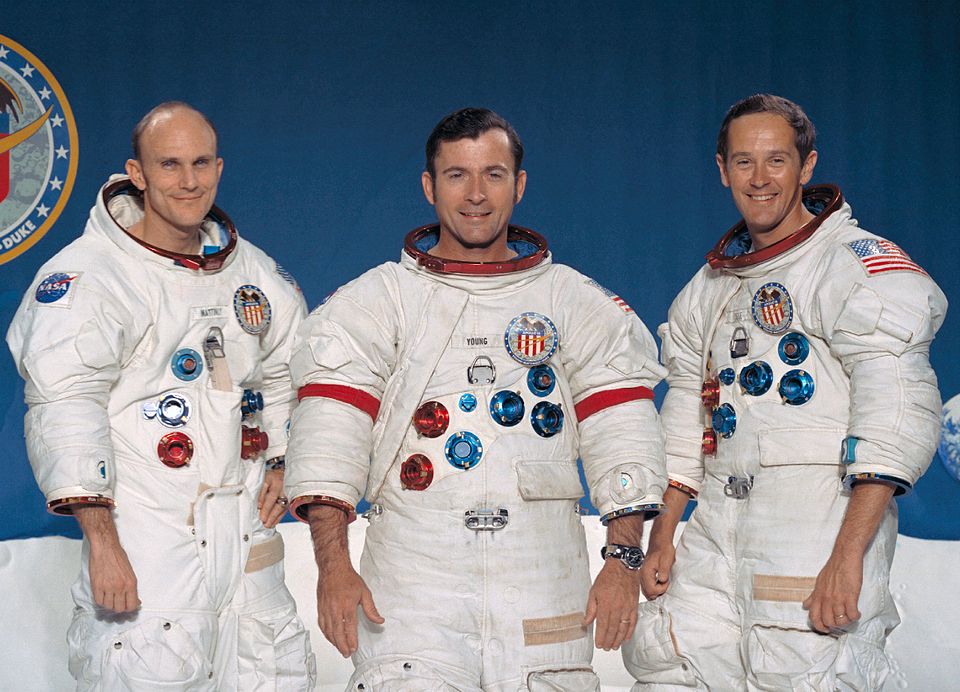
- Apollo 16's crew members is recorded as John Young[19].
- Apollo 16's crew members is recorded as Ken Mattingly[20].
- Apollo 16's crew members is recorded as Charles Duke[21].
- Apollo 16's location of landing is recorded as Pacific Ocean[22].
- Apollo 16's described by source is recorded as Retro Space HD[23].
- Apollo 16's orbits completed is recorded as {'amount': '+64'}[24].
- Apollo 16's start point is recorded as Kennedy Space Center Launch Complex 39A[25].
- Apollo 16's official name is recorded as {'lang': 'en', 'text': 'Apollo 16'}[26].
- Apollo 16's vessel is recorded as Apollo 16 Command and Service Module[27].
Body
When and Where
Apollo 16 is in the country of United States[3].
Context
Apollo 16 is part of Apollo space program[8]. Its instance of is recorded as human spaceflight[4]. It followed Apollo 15[6]. It was followed by Apollo 17[7].
Why It Matters
Apollo 16 ranks in the top 4% of human_spaceflight entities by monthly Wikipedia readership (3,671 views/month).[2] It has Wikipedia articles in 27 language editions, a strong signal of global cultural recognition.[28] It is known by 10 alternative names across languages and contexts.[29]