
Anne Frank
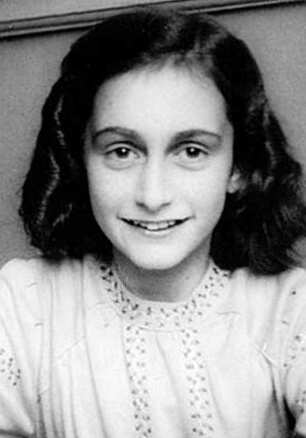
0 sources
Anne Frank
Summary
Anne Frank is a human[1]. Her place of birth was Maingau Clinic of the Red Cross[2]. She was born on June 12, 1929[3]. She died in Bergen-Belsen concentration camp[4]. She died on February 1, 1945[5]. She worked as a diarist[6]. She ranks in the top 0.13% of human entities by monthly Wikipedia readership (181,635 views/month, #1,331 of 1,000,298).[7]
Key Facts
- Anne Frank's place of birth was Maingau Clinic of the Red Cross[2].
- Anne Frank was born in Frankfurt[8].
- Anne Frank passed away in Bergen-Belsen concentration camp[4].
- Anne Frank was born on June 12, 1929[3].
- Anne Frank died on February 1, 1945[5].
- Anne Frank died on March 1945[9].
- Anne Frank died on March 12, 1945[10].
- Anne Frank died on March 31, 1945[11].
- Anne Frank died on January 1, 1945[12].
- Anne Frank is buried at Bergen-Belsen concentration camp[13].
- Anne Frank's father was Otto Heinrich Frank[14].
- Anne Frank's mother was Edith Frank-Holländer[15].
- Anne Frank held citizenship in Nazi Germany[16].
- Anne Frank held citizenship in Kingdom of the Netherlands[17].
- Anne Frank held citizenship in statelessness[18].
- Anne Frank held citizenship in Weimar Republic[19].
- German was Anne Frank's native language[20].
- Anne Frank is identified as part of the Ashkenazi Jews ethnic group[21].
- Anne Frank worked as a diarist[6].
- Anne Frank's field of work was diary[22].
- Anne Frank's education included a stint at 6th Montessori School Anne Frank[23].
- Anne Frank was educated at Amsterdam Jewish Lyceum[24].
- Anne Frank's education included a stint at Preparatory school No. 51[25].
- A notable work attributed to Anne Frank is Diary of Anne Frank[26].
- A notable work attributed to Anne Frank is Tales from the Secret Annex[27].
Body
Origins and Family
Recorded place of birth include Maingau Clinic of the Red Cross[2], a hospital[28], in Germany[29], founded in 1890[30] and Frankfurt[8], a big city[31], in Francia[32], founded in 0100[33]. Anne Frank was born on June 12, 1929[3]. Her father was Otto Heinrich Frank[14]. Her mother was Edith Frank-Holländer[15]. She is identified as part of the Ashkenazi Jews ethnic group[21]. German was her native language[20].
Education
Educated at 6th Montessori School Anne Frank[23], a primary school[34], in Netherlands[35], founded in 1933[36]; Amsterdam Jewish Lyceum[24], a school[37], in Netherlands[38], headquartered in Amsterdam[39]; and Preparatory school No. 51[25].
Career and Affiliations
Anne Frank's professions included diarist[6]. Her field of work was diary[22].
Works and Contributions
Notable works include Diary of Anne Frank[26], a posthumous work[40], founded in 1942[41] and Tales from the Secret Annex[27], a translation work[42]. Things named for her include Anne Frank House[43], a historic house museum[44], in Netherlands[45], founded in 1960[46], headquartered in Amsterdam[47]; 6th Montessori School Anne Frank[48], a primary school[49], in Netherlands[50], founded in 1933[51]; Anne Frank Tree[52], a heritage tree[53], in Netherlands[54]; 5535 Annefrank[55], an asteroid[56]; Anne Frank Educational Centre[57], an educational institution[58], in Germany[59]; Anne Frank Fund[60]; Anne Frank Prize[61]; and Jardin Anne-Frank[62].
Recognition
Anne Frank received the Bancarella Selection Prize[63].
Personal Life
Anne Frank's religion is recorded as Reform Judaism[64].
Death and Burial
Recorded date of death include February 1, 1945[5], March 1945[9], March 12, 1945[10], March 31, 1945[11], and January 1, 1945[12]. Anne Frank died in Bergen-Belsen concentration camp[4]. The cause of death was typhus[65]. Burial took place at Bergen-Belsen concentration camp[13].
Why It Matters
Anne Frank ranks in the top 0.13% of human entities by monthly Wikipedia readership (181,635 views/month, #1,331 of 1,000,298).[7] She has Wikipedia articles in 30 language editions, a strong signal of global cultural recognition.[66] She is known by 59 alternative names across languages and contexts.[67]
She has been cited as an influence by Philip Roth[68], a novelist[69], 1933–2018[70], of United States[71], awarded the Guggenheim Fellowship[72], specialised in belletristic literature[73].
Works attributed to her include Diary of her[74], a posthumous work[75], founded in 1942[76]. Entities named for her include Anne Frank House[43], a historic house museum[44], in Netherlands[45], founded in 1960[46], headquartered in Amsterdam[47]; 6th Montessori School Anne Frank[48], a primary school[49], in Netherlands[50], founded in 1933[51]; Anne Frank Tree[52], a heritage tree[53], in Netherlands[54]; 5535 Annefrank[55], an asteroid[56]; Anne Frank Educational Centre[57], an educational institution[58], in Germany[59]; and Anne Frank Fund[60].
FAQs
Where was Anne Frank born?
Born in Maingau Clinic of the Red Cross[2], Anne Frank…
Where did Anne Frank die?
Anne Frank passed away in Bergen-Belsen concentration camp[4].
Who were Anne Frank's parents?
Anne Frank's father was Otto Heinrich Frank[14]. Anne Frank's mother was Edith Frank-Holländer[15].
What did Anne Frank do for work?
Anne Frank worked as diarist[6].
Where did Anne Frank go to school?
Anne Frank was educated at 6th Montessori School Anne Frank[23], Amsterdam Jewish Lyceum[24], and Preparatory school No. 51[25].
What awards did Anne Frank receive?
Honors received include Bancarella Selection Prize[63].
Who did Anne Frank influence?
Anne Frank has been cited as an influence by Philip Roth[68].