
Andreas Dudith
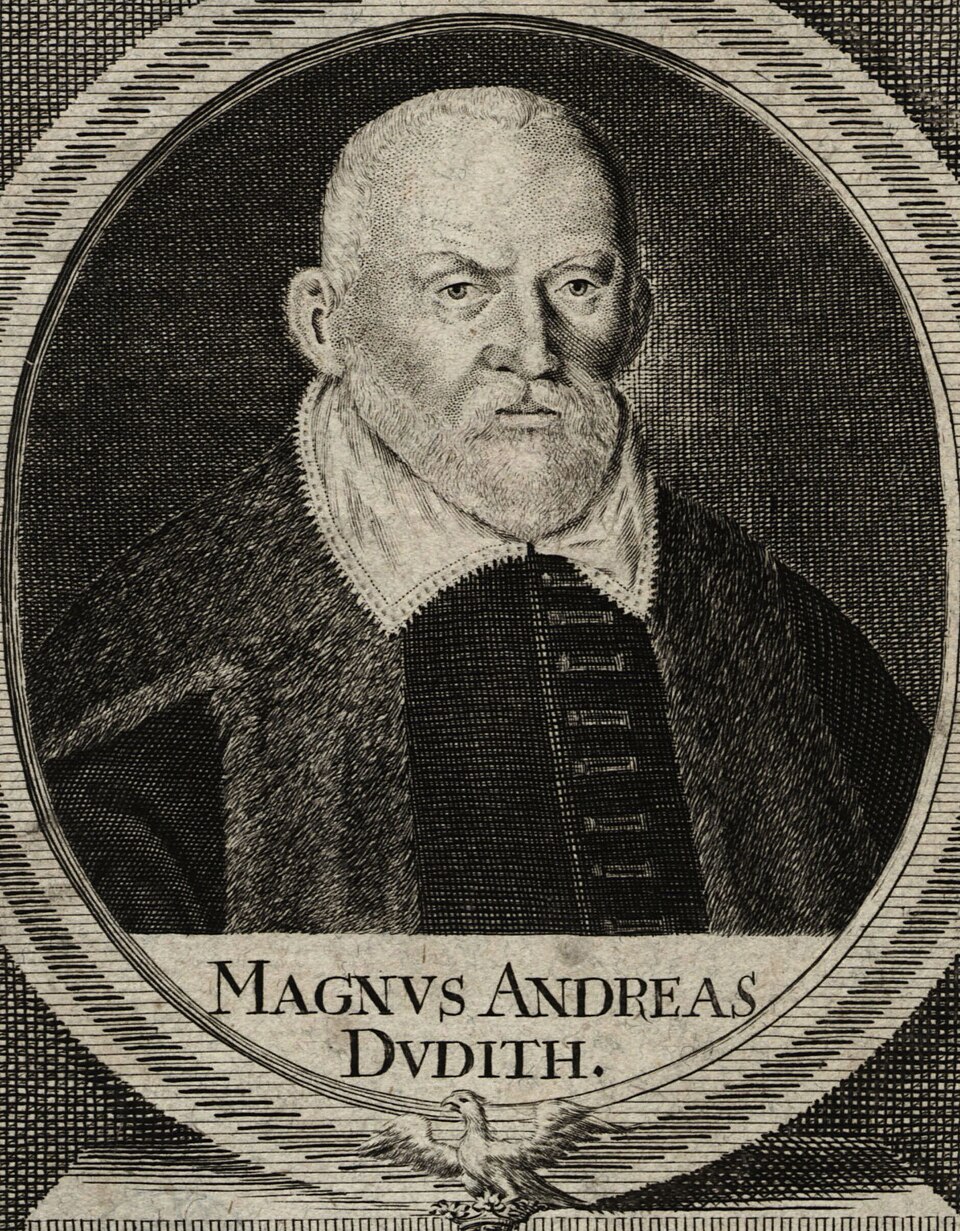
0 sources
Andreas Dudith
Summary
Andreas Dudith is a human[1]. His place of birth was Buda[2]. He was born on February 5, 1533[3]. He died in Wrocław[4]. He died on February 2, 1589[5]. He worked as a Catholic priest[6], diplomat[7], Catholic bishop[8], writer[9], and rhetorician[10]. He ranks in the top 0.73% of human entities by monthly Wikipedia readership (29 views/month, #7,291 of 1,000,298).[11]
Key Facts
- Andreas Dudith was born in Buda[2].
- Andreas Dudith passed away in Wrocław[4].
- Andreas Dudith was born on February 5, 1533[3].
- Andreas Dudith was born on February 16, 1533[12].
- Andreas Dudith died on February 2, 1589[5].
- Andreas Dudith died on February 23, 1589[13].
- Andreas Dudith is buried at St. Elizabeth’s Church Wrocław[14].
- Andreas Dudith held citizenship in Hungary[15].
- Andreas Dudith's professions included Catholic priest[6].
- Andreas Dudith's professions included diplomat[7].
- Andreas Dudith worked as a Catholic bishop[8].
- Andreas Dudith worked as a writer[9].
- Andreas Dudith's professions included rhetorician[10].
- Andreas Dudith worked as a translator[16].
- Andreas Dudith held the position of Roman Catholic Bishop of Pécs[17].
- Andreas Dudith held the position of Roman Catholic Bishop of Csanád[18].
- Andreas Dudith held the position of Roman Catholic Bishop of Knin[19].
- A notable work attributed to Andreas Dudith is Vita Reginaldi Poli Britanni S. R. Ecclesiae Cardinalis et Cantauriensis archiepiscopi[20].
- A notable work attributed to Andreas Dudith is De cometarum significatione commentariolus...[21].
- A notable work attributed to Andreas Dudith is Qua ratione, via et methodo ... legendae sint ...[22].
- A notable work attributed to Andreas Dudith is Orationes duae in sacrosancto oecumenico Consilio Tridentino habitae[23].
- A notable work attributed to Andreas Dudith is Sententia de calice laicis permittendo[24].
- A notable work attributed to Andreas Dudith is Ad Justum Lipsium epistolae[25].
- Andreas Dudith's religion is recorded as Catholic Church[26].
- Andreas Dudith's religion is recorded as Unity of the Brethren[27].
Body
Origins and Family
Born in Buda[2], Andreas Dudith… Recorded date of birth include February 5, 1533[3] and February 16, 1533[12].
Career and Affiliations
Recorded occupations include Catholic priest[6], diplomat[7], Catholic bishop[8], writer[9], rhetorician[10], and translator[16]. Positions held include Roman Catholic Bishop of Pécs[17], Roman Catholic Bishop of Csanád[18], and Roman Catholic Bishop of Knin[19].
Works and Contributions
Notable works include Vita Reginaldi Poli Britanni S. R. Ecclesiae Cardinalis et Cantauriensis archiepiscopi[20]; De cometarum significatione commentariolus...[21]; Qua ratione, via et methodo ... legendae sint ...[22], a version, edition or translation[28]; Orationes duae in sacrosancto oecumenico Consilio Tridentino habitae[23], a literary work[29]; Sententia de calice laicis permittendo[24], a literary work[30]; and Ad Justum Lipsium epistolae[25], a literary work[31].
Personal Life
Religious affiliations include Catholic Church[26], a Christian denomination[32], in Vatican City[33], founded in 0001[34], headquartered in Vatican City[35]; Unity of the Brethren[27], a Christian denomination[36], in Czech Republic[37], founded in 1880[38], headquartered in Liberec[39]; and Polish Brethren[40], a religious denomination[41], founded in 1562[42].
Death and Burial
Recorded date of death include February 2, 1589[5] and February 23, 1589[13]. Andreas Dudith died in Wrocław[4]. Burial took place at St. Elizabeth’s Church Wrocław[14].
Why It Matters
Andreas Dudith ranks in the top 0.73% of human entities by monthly Wikipedia readership (29 views/month, #7,291 of 1,000,298).[11] He has Wikipedia articles in 8 language editions, a strong signal of global cultural recognition.[43] He is known by 16 alternative names across languages and contexts.[44]
FAQs
Where was Andreas Dudith born?
Andreas Dudith's place of birth was Buda[2].
Where did Andreas Dudith die?
Andreas Dudith died in Wrocław[4].
What did Andreas Dudith do for work?
Andreas Dudith worked as Catholic priest[6], diplomat[7], Catholic bishop[8], writer[9], and rhetorician[10].