
Ali-Shir Nava'i
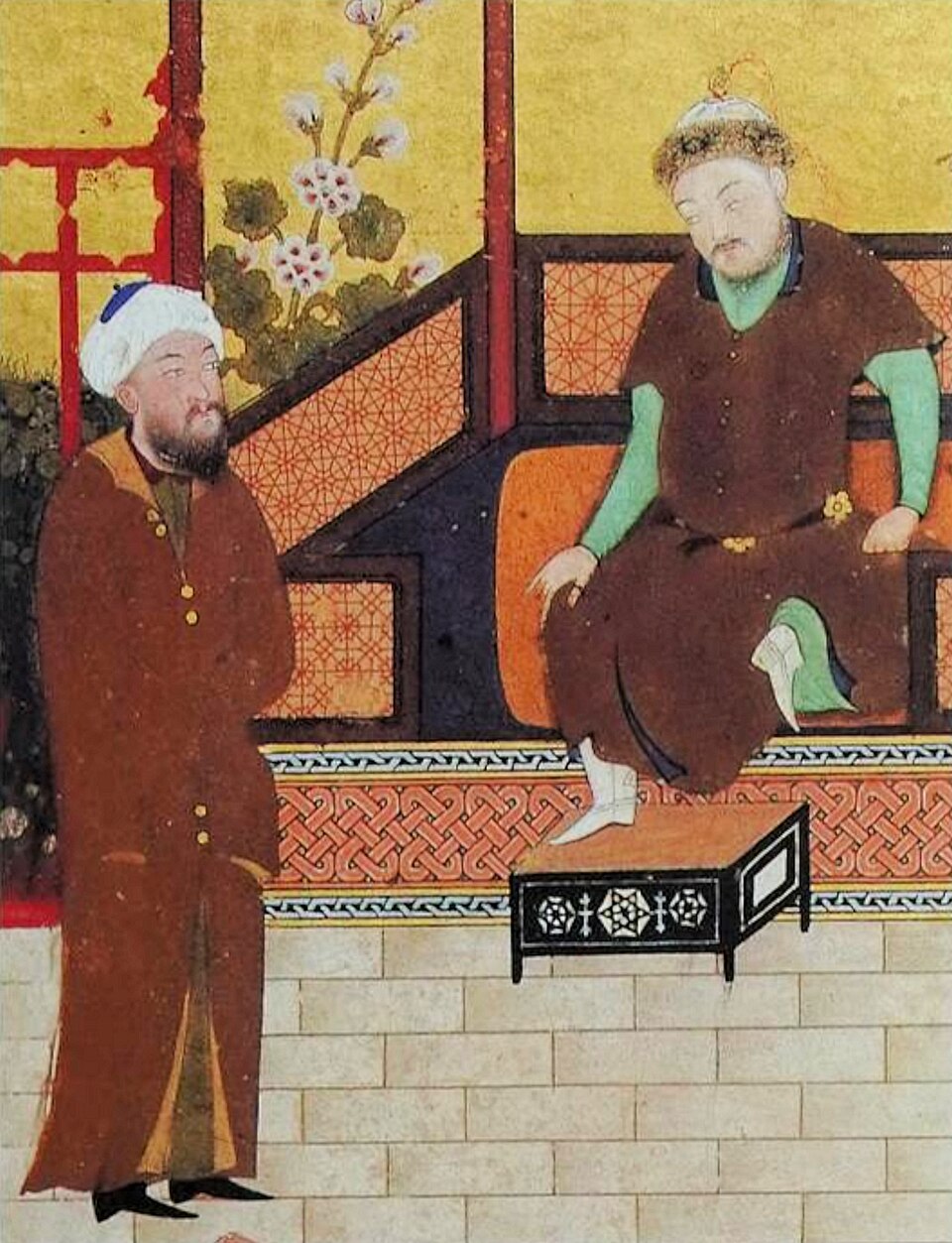
0 sources
Ali-Shir Nava'i
Summary
Ali-Shir Nava'i is a human[1]. His place of birth was Herat[2]. He was born on February 9, 1441[3]. He passed away in Herat[4]. He died on January 3, 1501[5]. He worked as a poet[6] and philosopher[7]. He has Wikipedia articles in 24 language editions, a strong signal of global cultural recognition.[8]
Key Facts
- Ali-Shir Nava'i's place of birth was Herat[2].
- Ali-Shir Nava'i died in Herat[4].
- Ali-Shir Nava'i was born on February 9, 1441[3].
- Ali-Shir Nava'i died on January 3, 1501[5].
- Ali-Shir Nava'i held citizenship in Timurid Empire[9].
- Ali-Shir Nava'i worked as a poet[6].
- Ali-Shir Nava'i's professions included philosopher[7].
- Ali-Shir Nava'i's field of work was philosophy[10].
- Ali-Shir Nava'i's field of work was poetry[11].
- Ali-Shir Nava'i held the position of vizier[12].
- Ali-Shir Nava'i's religion is recorded as Islam[13].
- Ali-Shir Nava'i is recorded as male[14].
- Ali-Shir Nava'i's instance of is recorded as human[15].
- Ali-Shir Nava'i is associated with the Sufism movement[16].
- Ali-Shir Nava'i is associated with the Sunni Islam movement[17].
- Ali-Shir Nava'i's Commons category is recorded as Ali-Shir Nava'i[18].
- Ali-Shir Nava'i's family name is recorded as Nevai[19].
- Ali-Shir Nava'i's given name is recorded as Ali[20].
- Ali-Shir Nava'i's sponsor is recorded as Husayn Bayqarah[21].
- Ali-Shir Nava'i's topic's main category is recorded as Category:Ali-Shir Nava'i[22].
- Ali-Shir Nava'i's described by source is recorded as Svensk uppslagsbok[23].
- Ali-Shir Nava'i's described by source is recorded as Armenian Soviet Encyclopedia, vol. 8[24].
- Ali-Shir Nava'i's described by source is recorded as TDV Islamic Encyclopedia[25].
- Ali-Shir Nava'i's languages spoken, written or signed is recorded as Persian[26].
- Ali-Shir Nava'i's languages spoken, written or signed is recorded as Chagatai[27].
Body
Origins and Family
Ali-Shir Nava'i's place of birth was Herat[2]. He was born on February 9, 1441[3].
Career and Affiliations
Recorded occupations include poet[6] and philosopher[7]. Fields of work include philosophy[10], an academic discipline[28] and poetry[11], a literary form[29]. Ali-Shir Nava'i held the position of vizier[12].
Personal Life
Ali-Shir Nava'i's religion is recorded as Islam[13].
Death and Burial
Ali-Shir Nava'i died on January 3, 1501[5]. He passed away in Herat[4].
Works and Contributions
Things named for Ali-Shir Nava'i include Alisher Navoi State Museum of Literature[30], a museum[31], in Uzbekistan[32], founded in 1947[33]; Alisher Navoi[34], a film[35], directed by Kamil Yarmatov[36]; Alisher Navo'i Tashkent State University of Uzbek Language and Literature[37], an academic institution[38], in Uzbekistan[39], founded in 2016[40], headquartered in Alisher Navoiy university building[41]; Alisher Navoiy State Prize[42], an award[43]; and Navoi[44], an impact crater[45].
Why It Matters
Ali-Shir Nava'i has Wikipedia articles in 24 language editions, a strong signal of global cultural recognition.[8] He is known by 75 alternative names across languages and contexts.[46]
Works attributed to him include The Wall of Iskandar[47], a narrative poetry[48]; Muhakamat al-Lughatayn[49], a bilingual dictionary[50]; and Majolis un-Nafois[51], a literary work[52]. Entities named for him include Alisher Navoi State Museum of Literature[30], a museum[31], in Uzbekistan[32], founded in 1947[33]; Alisher Navoi[34], a film[35], directed by Kamil Yarmatov[36]; Alisher Navo'i Tashkent State University of Uzbek Language and Literature[37], an academic institution[38], in Uzbekistan[39], founded in 2016[40], headquartered in Alisher Navoiy university building[41]; Alisher Navoiy State Prize[42], an award[43]; and Navoi[44], an impact crater[45].
FAQs
Where was Ali-Shir Nava'i born?
Born in Herat[2], Ali-Shir Nava'i…
Where did Ali-Shir Nava'i die?
Ali-Shir Nava'i passed away in Herat[4].