
Alfred Russel Wallace
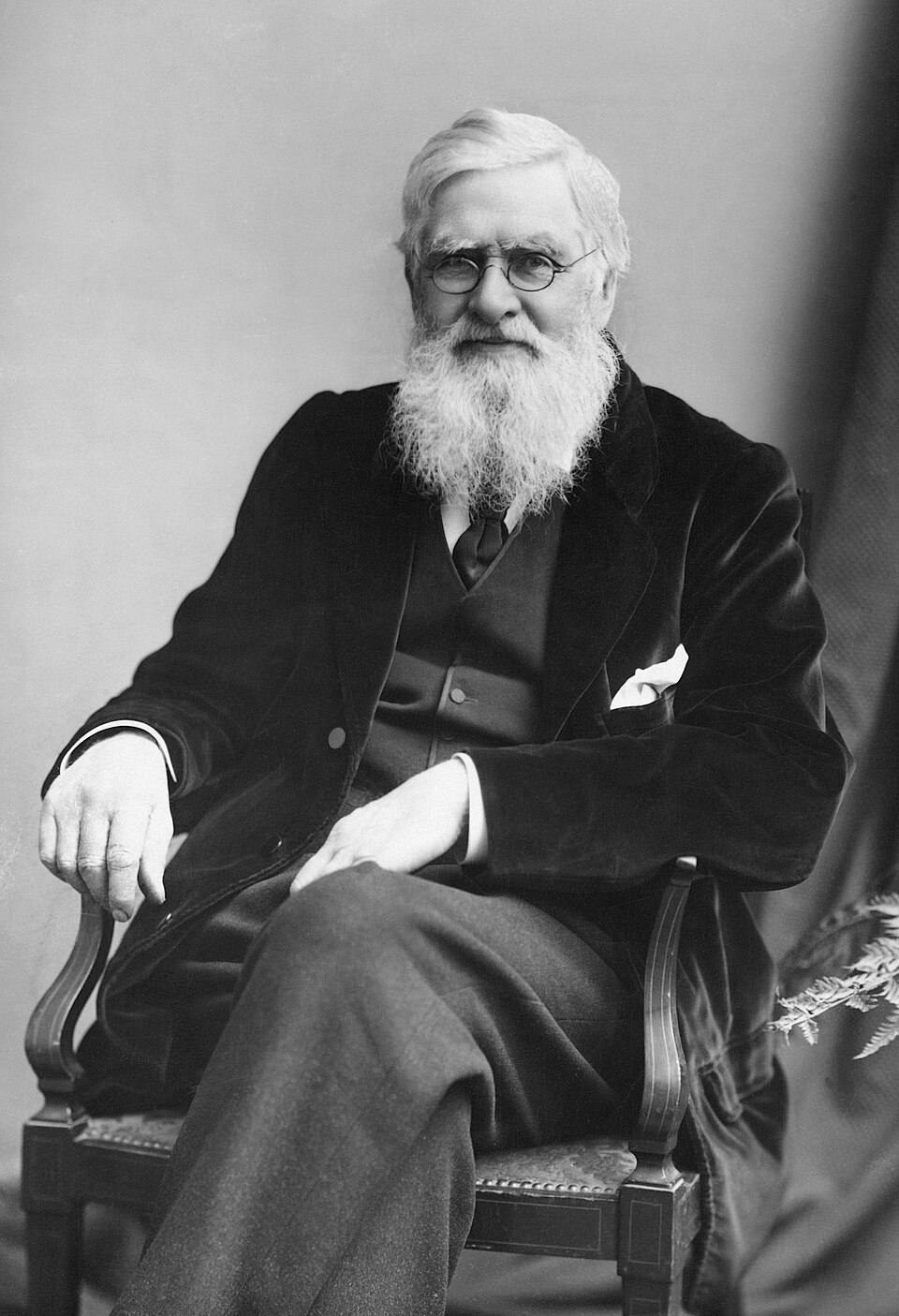
0 sources
Summary
Alfred Russel Wallace was born on January 8, 1823[1], in Usk[2]. He died on November 7, 1913[3], in Broadstone[4]. He worked as a mathematician[5], explorer[6], anthropologist[7], zoologist[8], and naturalist[9]. He ranks in the top 0.66% of human entities by monthly Wikipedia readership (10,300 views/month, #6,591 of 1,000,298).[10]
Key Facts
- Father: Thomas Vere Wallace[11]
- Mother: Mary Anne Greenell[12]
- Spouse: Annie Mitten[13]
- Child: Q140166442[14], Q140166443[15], Q140166444[16]
- Country of citizenship: United Kingdom of Great Britain and Ireland[17]
- Occupation: anti-vaccine activist[18], ornithologist[19], entomologist[20], geographer[21], beekeeper[22], botanist[23], world traveler[24], writer[25], zoological collector[26], botanical collector[27], scientific collector[28]
- Field of work: biogeography[29], evolution[30], naturalism[31], biology[32], geography[33]
- Position held: President of the Royal Entomological Society[34]
- Educated at: Birkbeck, University of London[35], Richard Hale School[36]
- Award received: Fellow of the Royal Society[37], Order of Merit[38], Copley Medal[39], Royal Medal[40], Founder’s Medal[41], Darwin Medal[42], Darwin–Wallace Medal[43], Linnean Medal[44], Fellow of the Zoological Society of London[45], Fellow of the Royal Geographical Society[46], Fellow of the Linnean Society of London[47], Doctor honoris causa of the University of Dublin[48], Honorary doctor of the University of Oxford[49], Honorary Fellow of the Royal Society Te Apārangi[50]
- Member of: Royal Society[51], Royal Geographical Society[52], Zoological Society of London[53], Royal Entomological Society[54], Zoologisch-Botanische Gesellschaft[55]
- Sex or gender: male[56]
- Commons category: Alfred Russel Wallace[57]
- Family name: Wallace[58]
- Given name: Alfred[59], Russel[60]
Body
Works and Contributions
Things named for Alfred Russel Wallace include Wallace Line[61], a biogeographic boundary[62], in Indonesia[63]; wallace effect[64], an evolutionary process[65]; Darwin–Wallace Medal[66]; Wallace[67]; and Wallace’s Large Spiny Rat[68].
Why It Matters
Alfred Russel Wallace has Wikipedia articles in 30 language editions, a strong signal of global cultural recognition.[69] He is known by 64 alternative names across languages and contexts.[70]
He has been cited as an influence by James L. Patton[71], a zoologist[72], b. 1941[73], of United States[74], awarded the C. Hart Merriam Award[75], specialised in mammalogy[76].
He is credited with the discovery of Great American Interchange[77], a historical event[78]. Works attributed to him include The Malay Archipelago[79], a written work[80] and On the Tendency of Species to form Varieties; and on the Perpetuation of Varieties and Species by Natural Means of Selection[81], an academic journal article[82], written by Charles Darwin[83]. Entities named for him include Wallace Line[61], a biogeographic boundary[62], in Indonesia[63]; wallace effect[64], an evolutionary process[65]; Darwin–Wallace Medal[66]; Wallace[67]; and Wallace’s Large Spiny Rat[68].
FAQs
Where was Alfred Russel Wallace born?
Alfred Russel Wallace's place of birth was Usk[2].
Where did Alfred Russel Wallace die?
Alfred Russel Wallace passed away in Broadstone[4].
Who were Alfred Russel Wallace's parents?
Alfred Russel Wallace's father was Thomas Vere Wallace[11]. Alfred Russel Wallace's mother was Mary Anne Greenell[12].
Who was Alfred Russel Wallace married to?
Alfred Russel Wallace's spouses include Annie Mitten[13].
What did Alfred Russel Wallace do for work?
Alfred Russel Wallace worked as a mathematician[5], explorer[6], anthropologist[7], zoologist[8], and naturalist[9].
Where did Alfred Russel Wallace go to school?
Alfred Russel Wallace was educated at Birkbeck, University of London[35] and Richard Hale School[36].
What awards did Alfred Russel Wallace receive?
Honors received include Fellow of the Royal Society[37], Order of Merit[38], Copley Medal[39], and Royal Medal[40].
Who did Alfred Russel Wallace influence?
Alfred Russel Wallace has been cited as an influence by James L. Patton[71].
What did Alfred Russel Wallace discover?
Alfred Russel Wallace is credited as discoverer of Great American Interchange[77].