
Alexander Prokhorov
0 sources
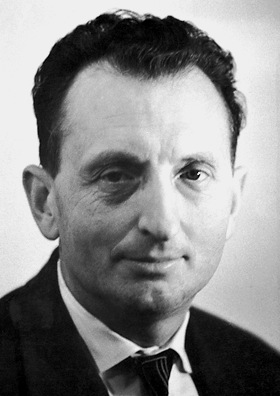
Alexander Prokhorov was born on July 11, 1916, in Atherton [1][2][3][4][5][6][7] and died on January 8, 2002, in Moscow [1][2][3][4][7]. He held citizenship in the Soviet Union and Russia . His professional life included roles as a physicist, university teacher, and editor , with education obtained at the Faculty of Physics, State University of Saint Petersbourg, Lebedev Physical Institute, and Saint Petersburg State University .
Prokhorov worked in the fields of physics, quantum electronics, laser, and maser [8]. He served as editor-in-chief and was a member of the German Academy of Sciences at Berlin, German Academy of Sciences Leopoldina, Russian Academy of Sciences, and Academy of Sciences of the USSR [9][10]. His accolades included the USSR State Prize, Order of Lenin, Medal "For the Victory over Germany in the Great Patriotic War 1941–1945", Hero of Socialist Labour, Order of the Patriotic War, 1st class, and the Nobel Prize in Physics [11][12].
Key Facts
- Place of burial: Novodevichy Cemetery[7]
- Spouse: Galina Shelepina[8]
- Country of citizenship: Soviet Union[9], Russia[10]
- Field of work: physics[11], quantum electronics[12], laser[13], maser[14]
- Position held: editor-in-chief[15]
- Employer: Moscow Institute of Physics and Technology[16], Lomonosov Moscow State University[17], Lebedev Physical Institute[18], Prokhorov General Physics Institute[19], SINP MSU[20], Laser Physics[21]
- Educated at: Faculty of Physics, State University of Saint Petersbourg[22], Lebedev Physical Institute[23], Saint Petersburg State University[24]
- Doctoral advisor: Vladimir Migulin[25], Sergei Rytov[26]
- Award received: USSR State Prize[27], Order of Lenin[28], Medal "For the Victory over Germany in the Great Patriotic War 1941–1945"[29], Hero of Socialist Labour[30], Order of the Patriotic War, 1st class[31], Nobel Prize in Physics[32], Order "For Merit to the Fatherland", 2nd class[33], Lenin Prize[34], Medal "For Courage"[35], Medal "Veteran of Labour"[36], Lomonosov Gold Medal[37], Medal "In Commemoration of the 850th Anniversary of Moscow"[38], Helmholtz Medal[39], Frederic Ives Medal[40]
- Sex or gender: male[41]
- Member of political party: Communist Party of the Soviet Union[42]
- Doctoral student: Nikolay Basov[43], Nikolay Karlov[44], Radik Martirosyan[45], Leonid Kornienko[46], Evgeny Velikhov[47]
- Commons category: Aleksandr Prokhorov[48]
Body
Works and Contributions
Things named for Alexander Prokhorov include 7269 Alprokhorov[49], an asteroid[50].
Why It Matters
Alexander Prokhorov has Wikipedia articles in 28 language editions, a strong signal of global cultural recognition.[51] He is known by 87 alternative names across languages and contexts.[52]
Entities named for him include 7269 Alprokhorov[49], an asteroid[50].
His notable doctoral advisees include Nikolay Basov[53], a physicist[54], 1922–2001[55], of Russian Socialist Federative Soviet Republic[56], awarded the USSR State Prize[57], specialised in radiophysics[58]; Evgeny Velikhov[59], a nuclear physicist[60], 1935–2024[61], of Soviet Union[62], awarded the USSR State Prize[63], specialised in atomic physics[64]; and Yevgeny Dianov[65], a physicist[66], 1936–2019[67], of Soviet Union[68], awarded the USSR State Prize[69], specialised in fiber optics[70].
FAQs
Where was Alexander Prokhorov born?
Alexander Prokhorov was born in Atherton[1].
Where did Alexander Prokhorov die?
Alexander Prokhorov passed away in Moscow[2].
Who was Alexander Prokhorov married to?
Alexander Prokhorov's spouses include Galina Shelepina[8].
What did Alexander Prokhorov do for work?
Alexander Prokhorov worked as a physicist[3], university teacher[4], and editor[5].
Where did Alexander Prokhorov go to school?
Alexander Prokhorov was educated at Faculty of Physics, State University of Saint Petersbourg[22], Lebedev Physical Institute[23], and Saint Petersburg State University[24].
What awards did Alexander Prokhorov receive?
Honors received include USSR State Prize[27], Order of Lenin[28], Medal "For the Victory over Germany in the Great Patriotic War 1941–1945"[29], and Hero of Socialist Labour[30].