
Alessandro Volta
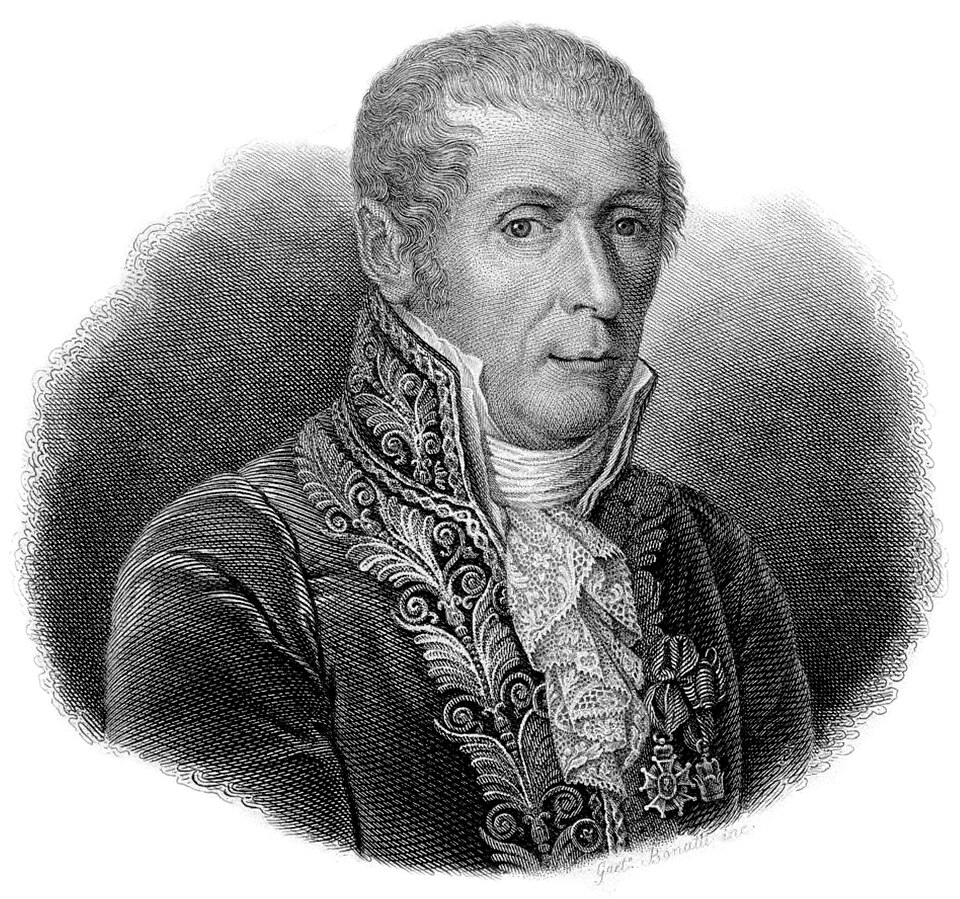
0 sources
Alessandro Volta
Summary
Alessandro Volta is a human[1]. He was born in Como[2]. He was born on February 18, 1745[3]. He passed away in Como[4]. He died on March 5, 1827[5]. He worked as a physicist[6], inventor[7], academic[8], chemist[9], and university teacher[10]. He ranks in the top 0.66% of human entities by monthly Wikipedia readership (90 views/month, #6,576 of 1,000,298).[11]
Key Facts
- Alessandro Volta's place of birth was Como[2].
- Alessandro Volta died in Como[4].
- Alessandro Volta was born on February 18, 1745[3].
- Alessandro Volta died on March 5, 1827[5].
- Alessandro Volta is buried at tomb of Alessandro Volta[12].
- Alessandro Volta was married to Teresa Pellegrino[13].
- A child of Alessandro Volta was Zanino Volta[14].
- A child of Alessandro Volta was Luigi Volta[15].
- Alessandro Volta held citizenship in Duchy of Milan[16].
- Alessandro Volta held citizenship in Cisalpine Republic[17].
- Alessandro Volta held citizenship in Kingdom of Lombardy–Venetia[18].
- Alessandro Volta's professions included physicist[6].
- Alessandro Volta's professions included inventor[7].
- Alessandro Volta's professions included academic[8].
- Alessandro Volta's professions included chemist[9].
- Alessandro Volta's professions included university teacher[10].
- Alessandro Volta's field of work was physiology[19].
- Alessandro Volta held the position of senator[20].
- Among Alessandro Volta's employers was University of Pavia[21].
- Alessandro Volta received the Knight of the Legion of Honour[22].
- Alessandro Volta received the Fellow of the Royal Society[23].
- Alessandro Volta received the Copley Medal[24].
- Alessandro Volta received the Order of the Iron Crown (Kingdom of Italy)[25].
- Alessandro Volta was a member of Accademia Nazionale delle Scienze detta dei XL[26].
- Alessandro Volta was a member of Bavarian Academy of Sciences and Humanities[27].
Body
Origins and Family
Alessandro Volta's place of birth was Como[2]. He was born on February 18, 1745[3].
Career and Affiliations
Recorded occupations include physicist[6], inventor[7], academic[8], chemist[9], and university teacher[10]. Alessandro Volta's field of work was physiology[19]. He was employed by University of Pavia[21]. He held the position of senator[20].
Recognition
Awards received include Knight of the Legion of Honour[22], a Q1499804[28], in France[29]; Fellow of the Royal Society[23], a fellowship award[30], in United Kingdom[31]; Copley Medal[24], a medallion[32], in United Kingdom[33], founded in 1731[34]; and Order of the Iron Crown (Kingdom of Italy)[25], an order[35], in Kingdom of Italy[36], founded in 1805[37].
Personal Life
Alessandro Volta was married to Teresa Pellegrino[13]. Children include Zanino Volta[14], 1795–1869[38] and Luigi Volta[15], an astronomer[39], 1876–1952[40], of Italy[41], specialised in astronomy[42]. His religion is recorded as Catholicism[43].
Death and Burial
Alessandro Volta died on March 5, 1827[5]. He passed away in Como[4]. He is buried at tomb of him[12].
Works and Contributions
Things named for Alessandro Volta include volt[44], a SI unit with special name[45]; voltaic pile[46], a battery[47], founded in 1800[48]; volt ampere[49], an unit of power[50]; Volta[51], a microarchitecture[52]; Electrophorus voltai[53], a taxon[54]; Volta potential[55]; Volta Prize[56]; and voltaite[57].
Why It Matters
Alessandro Volta ranks in the top 0.66% of human entities by monthly Wikipedia readership (90 views/month, #6,576 of 1,000,298).[11] He has Wikipedia articles in 30 language editions, a strong signal of global cultural recognition.[58] He is known by 45 alternative names across languages and contexts.[59]
He is credited with the discovery of methane[60], a gas[61] and incandescent light bulb[62], an invention[63]. Entities named for him include volt[44], a SI unit with special name[45]; voltaic pile[46], a battery[47], founded in 1800[48]; volt ampere[49], an unit of power[50]; Volta[51], a microarchitecture[52]; Electrophorus voltai[53], a taxon[54]; and Volta potential[55].
FAQs
Where was Alessandro Volta born?
Alessandro Volta's place of birth was Como[2].
Where did Alessandro Volta die?
Alessandro Volta passed away in Como[4].
Who was Alessandro Volta married to?
Alessandro Volta's spouses include Teresa Pellegrino[13].
What did Alessandro Volta do for work?
Alessandro Volta worked as physicist[6], inventor[7], academic[8], chemist[9], and university teacher[10].
What awards did Alessandro Volta receive?
Honors received include Knight of the Legion of Honour[22], Fellow of the Royal Society[23], Copley Medal[24], and Order of the Iron Crown (Kingdom of Italy)[25].
What did Alessandro Volta discover?
Alessandro Volta is credited as discoverer of methane[60] and incandescent light bulb[62].