
Alessandro Scarlatti
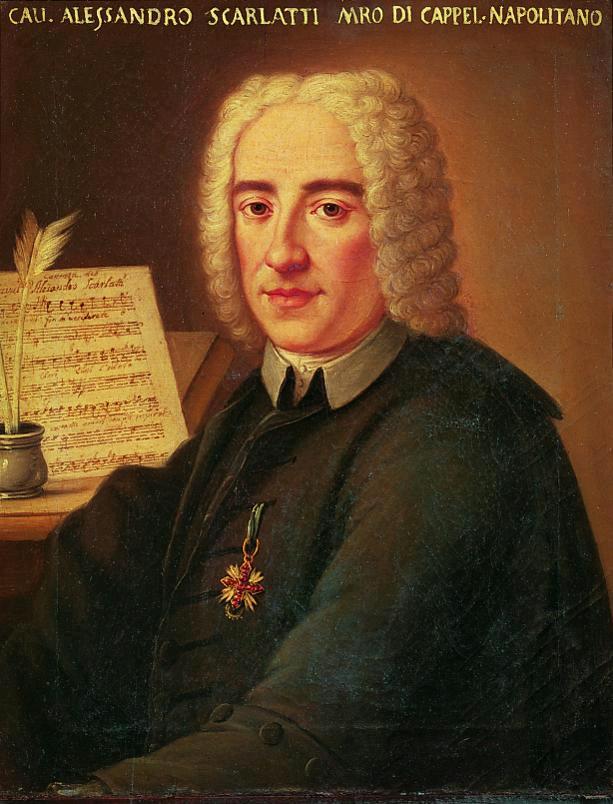
0 sources
Alessandro Scarlatti was born on May 2, 1660, in Palermo[1][2][3][4][5][6][7][8][9][10][11] and died on October 22, 1725, in Naples[1][2][3][4][6][12][13][9]. He worked as a composer and harpsichordist[3][10] in the fields of music and Baroque music[14]. He was associated with the Baroque music movement.
He held the position of chapelmaster from 1684 to 1702. Additionally, he was a member of the Arcadian Academy.
Alessandro Scarlatti
Summary
Alessandro Scarlatti is a human[1]. His place of birth was Palermo[2]. He was born on May 2, 1660[3]. He passed away in Naples[4]. He died on October 22, 1725[5]. He worked as a composer[6] and harpsichordist[7]. He ranks in the top 0.7% of human entities by monthly Wikipedia readership (9 views/month, #7,049 of 1,000,298).[8]
Key Facts
- Born in Palermo[2], Alessandro Scarlatti…
- Alessandro Scarlatti died in Naples[4].
- Alessandro Scarlatti was born on May 2, 1660[3].
- Alessandro Scarlatti died on October 22, 1725[5].
- Alessandro Scarlatti died on October 24, 1725[9].
- A child of Alessandro Scarlatti was Domenico Scarlatti[10].
- A child of Alessandro Scarlatti was Pietro Filippo Scarlatti[11].
- Alessandro Scarlatti worked as a composer[6].
- Alessandro Scarlatti worked as a harpsichordist[7].
- Alessandro Scarlatti's field of work was music[12].
- Alessandro Scarlatti's field of work was Baroque music[13].
- Alessandro Scarlatti held the position of chapelmaster[14].
- A notable student of Alessandro Scarlatti was Francesco Geminiani[15].
- A notable student of Alessandro Scarlatti was Francesco Durante[16].
- A notable student of Alessandro Scarlatti was Nicola Fago[17].
- A notable work attributed to Alessandro Scarlatti is La Santissima Annunziata[18].
- A notable work attributed to Alessandro Scarlatti is Stabat Mater[19].
- A notable work attributed to Alessandro Scarlatti is Griselda[20].
- A notable work attributed to Alessandro Scarlatti is Mitridate Eupatore[21].
- A notable work attributed to Alessandro Scarlatti is Il Sedecia[22].
- Alessandro Scarlatti was a member of Arcadian Academy[23].
- Alessandro Scarlatti is recorded as male[24].
- Alessandro Scarlatti's instance of is recorded as human[25].
- Alessandro Scarlatti is associated with the Baroque music movement[26].
- Alessandro Scarlatti's genre is classical music[27].
Body
Origins and Family
Born in Palermo[2], Alessandro Scarlatti… he was born on May 2, 1660[3].
Education
Studied under Giacomo Carissimi[28], a composer[29], 1605–1674[30], of Papal States[31]; Vincenzo Amato[32], a composer[33], 1629–1670[34]; and Marc'Antonio Sportonio[35].
Career and Affiliations
Recorded occupations include composer[6] and harpsichordist[7]. Fields of work include music[12], a type of arts[36] and Baroque music[13], a music genre[37], founded in 1600[38]. Alessandro Scarlatti held the position of chapelmaster[14]. Notable students include Francesco Geminiani[15], a composer[39], 1687–1762[40], of Republic of Lucca[41]; Francesco Durante[16], a composer[42], 1684–1755[43]; and Nicola Fago[17], a composer[44], 1677–1745[45].
Works and Contributions
Notable works include La Santissima Annunziata[18], a musical work/composition[46]; Stabat Mater[19], a musical work/composition[47]; Griselda[20], a dramatico-musical work[48]; Mitridate Eupatore[21], a dramatico-musical work[49]; and Il Sedecia[22], a musical work/composition[50]. Things named for Alessandro Scarlatti include Palermo Conservatory[51], an academic institution[52], in Italy[53], founded in 1618[54]; Scarlatti[55], an impact crater[56]; and Scarlatti Peak[57].
Personal Life
Children include Domenico Scarlatti[10], a composer[58], 1685–1757[59], of Kingdom of Spain[60], awarded the Knight of the Military Order of Saint James of the Sword[61], specialised in sonata[62] and Pietro Filippo Scarlatti[11], a composer[63], 1679–1750[64].
Death and Burial
Recorded date of death include October 22, 1725[5] and October 24, 1725[9]. Alessandro Scarlatti died in Naples[4].
Why It Matters
Alessandro Scarlatti ranks in the top 0.7% of human entities by monthly Wikipedia readership (9 views/month, #7,049 of 1,000,298).[8] He has Wikipedia articles in 27 language editions, a strong signal of global cultural recognition.[65] He is known by 29 alternative names across languages and contexts.[66]
He has been cited as an influence by George Frideric Handel[67], a composer[68], 1685–1759[69], of Brandenburg-Prussia[70].
Entities named for him include Palermo Conservatory[51], an academic institution[52], in Italy[53], founded in 1618[54]; Scarlatti[55], an impact crater[56]; and Scarlatti Peak[57].
FAQs
Where was Alessandro Scarlatti born?
Born in Palermo[2], Alessandro Scarlatti…
Where did Alessandro Scarlatti die?
Alessandro Scarlatti passed away in Naples[4].
What did Alessandro Scarlatti do for work?
Alessandro Scarlatti worked as composer[6] and harpsichordist[7].
Who did Alessandro Scarlatti influence?
Alessandro Scarlatti has been cited as an influence by George Frideric Handel[67].