
Aldo Leopold
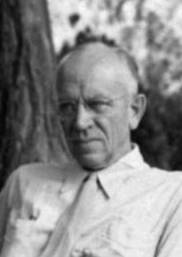
0 sources
Aldo Leopold
Summary
Aldo Leopold is a human[1]. He was born in Burlington[2]. He was born on January 11, 1887[3]. He died in Baraboo[4]. He died on April 21, 1948[5]. He worked as an ecologist[6], forestry scientist[7], university teacher[8], botanical collector[9], and environmentalist[10]. He ranks in the top 0.69% of human entities by monthly Wikipedia readership (4,176 views/month, #6,917 of 1,000,298).[11]
Key Facts
- Aldo Leopold was born in Burlington[2].
- Aldo Leopold died in Baraboo[4].
- Aldo Leopold was born on January 11, 1887[3].
- Aldo Leopold was born on January 1, 1887[12].
- Aldo Leopold died on April 21, 1948[5].
- Aldo Leopold died on January 1, 1948[13].
- Burial took place at Burlington[14].
- Aldo Leopold is buried at Aspen Grove Cemetery[15].
- Among Aldo Leopold's spouses was Estella Bergere[16].
- A child of Aldo Leopold was Nina Leopold Bradley[17].
- A child of Aldo Leopold was Estella Leopold[18].
- A child of Aldo Leopold was Luna Leopold[19].
- A child of Aldo Leopold was A. Carl Leopold[20].
- A child of Aldo Leopold was A. Starker Leopold[21].
- Aldo Leopold held citizenship in United States[22].
- Aldo Leopold worked as an ecologist[6].
- Aldo Leopold worked as a forestry scientist[7].
- Aldo Leopold worked as a university teacher[8].
- Aldo Leopold's professions included botanical collector[9].
- Aldo Leopold worked as an environmentalist[10].
- Aldo Leopold worked as a philosopher[23].
- Aldo Leopold's field of work was ecology[24].
- Aldo Leopold's field of work was nature writing[25].
- Aldo Leopold's field of work was creative and professional writing[26].
- Aldo Leopold's field of work was prose[27].
Body
Origins and Family
Born in Burlington[2], Aldo Leopold… Recorded date of birth include January 11, 1887[3] and January 1, 1887[12].
Education
Educated at Yale School of the Environment[28], a professional school[29], in United States[30]; Lawrenceville School[31], a boarding school[32], in United States[33], founded in 1810[34]; Yale University[35], a private university[36], in United States[37], founded in 1701[38], headquartered in New Haven[39]; Sheffield Scientific School[40], a college[41], in United States[42], founded in 1847[43]; and Burlington High School[44], a high school[45], in United States[46], founded in 1914[47].
Career and Affiliations
Recorded occupations include ecologist[6], forestry scientist[7], university teacher[8], botanical collector[9], environmentalist[10], and philosopher[23]. Fields of work include ecology[24], an academic discipline[48]; nature writing[25], a literature by topic[49]; creative and professional writing[26], an academic discipline[50]; prose[27], a literary form[51]; philosophy[52], an academic discipline[53]; and forestry[54], an industry[55]. Employers include University of Wisconsin–Madison[56], United States Forest Service[57], and University of Wisconsin–Madison Arboretum[58]. Aldo Leopold held the position of chairperson[59]. A notable student of him was Frances Hamerstrom[60].
Works and Contributions
Aldo Leopold is credited with the discovery of environmental ethics[61]. Notable works include A Sand County Almanac[62], The Wilderness Society[63], and Thinking like a mountain[64]. Things named for him include Aldo Leopold Award[65], an award[66] and Aldo Leopold Wilderness Research Institute[67], a research institute[68], in United States[69].
Recognition
Aldo Leopold received the John Burroughs Medal[70].
Personal Life
Aldo Leopold was married to Estella Bergere[16]. Children include Nina Leopold Bradley[17], an activist[71], 1917–2011[72], of United States[73]; Estella Leopold[18], a botanist[74], 1927–2024[75], of United States[76], awarded the Paleontological Society Medal[77], specialised in environmental protection[78]; Luna Leopold[19], a geologist[79], 1915–2006[80], of United States[81], awarded the Benjamin Franklin Medal[82], specialised in geomorphology[83]; A. Carl Leopold[20], a botanist[84], 1919–2009[85], of United States[86], specialised in plant physiology[87]; and A. Starker Leopold[21], a zoologist[88], 1913–1983[89], of United States[90], awarded the Guggenheim Fellowship[91].
Death and Burial
Recorded date of death include April 21, 1948[5] and January 1, 1948[13]. Aldo Leopold died in Baraboo[4]. The cause of death was myocardial infarction[92]. Recorded place of burial include Burlington[14] and Aspen Grove Cemetery[15].
Why It Matters
Aldo Leopold ranks in the top 0.69% of human entities by monthly Wikipedia readership (4,176 views/month, #6,917 of 1,000,298).[11] He has Wikipedia articles in 19 language editions, a strong signal of global cultural recognition.[93] He is known by 19 alternative names across languages and contexts.[94]
He has been cited as an influence by Wendell Berry[95], a poet[96], 1934–2026[97], of United States[98], awarded the Guggenheim Fellowship[99], specialised in English-language literature[100]; Rachel Carson[101], a marine biologist[102], 1907–1964[103], of United States[104], awarded the Guggenheim Fellowship[105], specialised in biology[106]; and Edward Abbey[107], a writer[108], 1927–1989[109], of United States[110], awarded the Guggenheim Fellowship[111], specialised in nature conservation[112].
He is credited with the discovery of trophic cascade[113], a phenomenon[114]. Works attributed to him include A Sand County Almanac[115], a written work[116]. Entities named for him include Aldo Leopold Award[65], an award[66] and Aldo Leopold Wilderness Research Institute[67], a research institute[68], in United States[69].
FAQs
Where was Aldo Leopold born?
Born in Burlington[2], Aldo Leopold…
Where did Aldo Leopold die?
Aldo Leopold died in Baraboo[4].
Who was Aldo Leopold married to?
Aldo Leopold's spouses include Estella Bergere[16].
What did Aldo Leopold do for work?
Aldo Leopold worked as ecologist[6], forestry scientist[7], university teacher[8], botanical collector[9], and environmentalist[10].
Where did Aldo Leopold go to school?
Aldo Leopold was educated at Yale School of the Environment[28], Lawrenceville School[31], Yale University[35], and Sheffield Scientific School[40].
What awards did Aldo Leopold receive?
Honors received include John Burroughs Medal[70].
Who did Aldo Leopold influence?
Aldo Leopold has been cited as an influence by Wendell Berry[95], Rachel Carson[101], and Edward Abbey[107].
What did Aldo Leopold discover?
Aldo Leopold is credited as discoverer of trophic cascade[113].