
Albert Szent-Györgyi
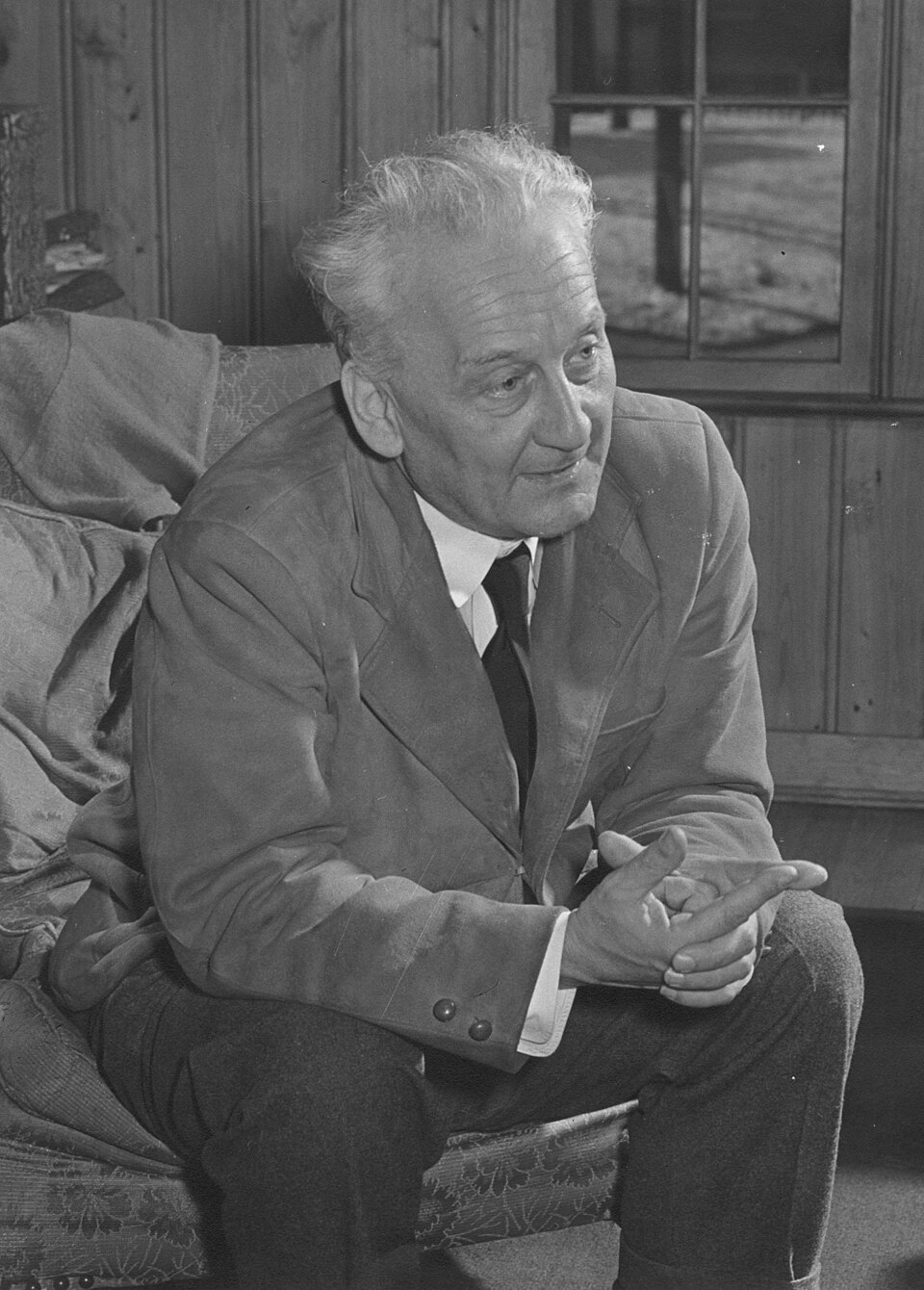
0 sources
Summary
Albert Szent-Györgyi was born on September 16, 1893[1], in Budapest[2]. He died on October 22, 1986[3], in Woods Hole[4]. He worked as a biochemist[5], chemist[6], politician[7], physician[8], and university teacher[9]. He ranks in the top 0.71% of human entities by monthly Wikipedia readership (2,018 views/month, #7,109 of 1,000,298).[10]
Key Facts
- Date of death: October 21, 1986[11]
- Place of burial: Woods Hole Village Cemetery[12]
- Mother: Jozefina Lenhossék[13]
- Spouse: Kornélia Demény[14], Márta Borbíró[15], June Susan Wichterman[16], Marcia Houston[17]
- Country of citizenship: Hungary[18], United States[19]
- Native language: Hungarian[20]
- Occupation: peace activist[21], physiologist[22]
- Field of work: biochemistry[23], physiology[24]
- Position held: member of the Hungarian upper chamber[25], member of the Provisional National Assembly[26], member of the National Assembly of Hungary[27]
- Employer: University of Groningen[28], Leiden University[29], University of Szeged[30], Fitzwilliam College[31]
- Educated at: Fitzwilliam College[32], Semmelweis University[33], Erzsébet University[34], Eötvös Loránd University[35]
- Doctoral advisor: Hartog Jacob Hamburger[36]
- Award received: Nobel Prize in Physiology or Medicine[37], Corvin Wreath[38], doctor honoris causa from the University of Paris[39], August Wilhelm von Hofmann Medal[40], Cameron Prize of the University of Edinburgh[41], Albert Lasker Award for Basic Medical Research[42], honorary doctor of the University of Bordeaux[43], Honorary Fellow of the Royal Society of Edinburgh[44], honorary doctor of Caen University[45]
- Member of: Hungarian Academy of Sciences[46], Pontifical Academy of Sciences[47], American Academy of Arts and Sciences[48], Russian Academy of Sciences[49], German Academy of Sciences Leopoldina[50], National Academy of Sciences[51], Göttingen Academy of Sciences and Humanities in Lower Saxony[52], Accademia Nazionale dei Lincei[53]
- Sex or gender: male[54]
- Member of political party: independent politician[55]
- Commons category: Albert Szent-Györgyi[56]
- Cause of death: kidney failure[57]
- Academic degree: Doctor of Medicine[58], Doctor of Philosophy[59]
- Participated in conflict: World War I[60]
Body
Works and Contributions
Things named for Albert Szent-Györgyi include Albert Szent-Györgyi University of Medicine[61], a university[62], in Hungary[63], founded in 1951[64]; Szent-Györgyi Prize for Progress in Cancer Research[65], an award[66], in United States[67], founded in 2006[68]; and Szent-Györgyi Albert Prize[69], an award[70], in Hungary[71].
Why It Matters
Albert Szent-Györgyi has Wikipedia articles in 28 language editions, a strong signal of global cultural recognition.[72] He is known by 131 alternative names across languages and contexts.[73]
He has been cited as an influence by Irwin Stone[74], a biochemist[75], 1907–1984[76] and Laszlo Lorand[77], a chemist[78], 1923–2018[79], of Hungary[80], specialised in biochemistry[81].
Entities named for him include Albert Szent-Györgyi University of Medicine[61], a university[62], in Hungary[63], founded in 1951[64]; Szent-Györgyi Prize for Progress in Cancer Research[65], an award[66], in United States[67], founded in 2006[68]; and Szent-Györgyi Albert Prize[69], an award[70], in Hungary[71].
FAQs
Where was Albert Szent-Györgyi born?
Albert Szent-Györgyi was born in Budapest[2].
Where did Albert Szent-Györgyi die?
Albert Szent-Györgyi passed away in Woods Hole[4].
Who were Albert Szent-Györgyi's parents?
Albert Szent-Györgyi's mother was Jozefina Lenhossék[13].
Who was Albert Szent-Györgyi married to?
Albert Szent-Györgyi's spouses include Kornélia Demény[14], Márta Borbíró[15], June Susan Wichterman[16], and Marcia Houston[17].
What did Albert Szent-Györgyi do for work?
Albert Szent-Györgyi worked as a biochemist[5], chemist[6], politician[7], physician[8], and university teacher[9].
Where did Albert Szent-Györgyi go to school?
Albert Szent-Györgyi was educated at Fitzwilliam College[32], Semmelweis University[33], Erzsébet University[34], and Eötvös Loránd University[35].
What awards did Albert Szent-Györgyi receive?
Honors received include Nobel Prize in Physiology or Medicine[37], Corvin Wreath[38], doctor honoris causa from the University of Paris[39], and August Wilhelm von Hofmann Medal[40].
Who did Albert Szent-Györgyi influence?
Albert Szent-Györgyi has been cited as an influence by Irwin Stone[74] and Laszlo Lorand[77].