
Adolf Windaus
0 sources
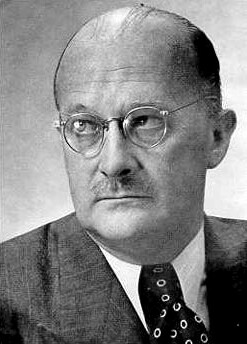
Adolf Windaus was a German chemist and university teacher born on December 25, 1876 in Berlin [1][2][3][4][5] . He studied at Humboldt-Universität zu Berlin, the University of Freiburg, and Französisches Gymnasium Berlin . His field was organic chemistry .
Windaus held the position of professor and worked at the University of Freiburg (?–1899), the University of Göttingen, and the University of Innsbruck . He received several awards, including the Commander's Cross of the Order of Merit of the Federal Republic of Germany, the Pour le Mérite for Sciences and Arts order, the Nobel Prize in Chemistry, the Adolf-von-Baeyer Gold Medal, and the Goethe Medal for Art and Science [6][7]. He died on June 9, 1959 in Göttingen and was buried at Göttingen City Cemetery [1][2][3][4][5] [8].
Adolf Windaus
Summary
Adolf Windaus is a human[1]. His place of birth was Berlin[2]. He was born on December 25, 1876[3]. He died in Göttingen[4]. He died on June 9, 1959[5]. He worked as a chemist[6] and university teacher[7]. He ranks in the top 0.73% of human entities by monthly Wikipedia readership (4 views/month, #7,264 of 1,000,298).[8]
Key Facts
- Born in Berlin[2], Adolf Windaus…
- Adolf Windaus died in Göttingen[4].
- Adolf Windaus was born on December 25, 1876[3].
- Adolf Windaus died on June 9, 1959[5].
- Adolf Windaus is buried at Göttingen City Cemetery[9].
- Adolf Windaus was married to Elisabeth Windaus[10].
- A child of Adolf Windaus was Günter Windaus[11].
- Adolf Windaus held citizenship in Germany[12].
- Adolf Windaus's professions included chemist[6].
- Adolf Windaus's professions included university teacher[7].
- Adolf Windaus's field of work was organic chemistry[13].
- Adolf Windaus held the position of professor[14].
- Adolf Windaus was employed by University of Freiburg[15].
- Adolf Windaus was employed by University of Göttingen[16].
- Adolf Windaus was employed by University of Innsbruck[17].
- Adolf Windaus's education included a stint at Humboldt-Universität zu Berlin[18].
- Adolf Windaus was educated at University of Freiburg[19].
- Adolf Windaus's education included a stint at Französisches Gymnasium Berlin[20].
- Adolf Windaus's doctoral advisor was Heinrich Kiliani[21].
- A notable student of Adolf Windaus was Adolf Butenandt[22].
- Adolf Windaus received the Commander's Cross of the Order of Merit of the Federal Republic of Germany[23].
- Adolf Windaus received the Pour le Mérite for Sciences and Arts order[24].
- Adolf Windaus received the Nobel Prize in Chemistry[25].
- Adolf Windaus received the Adolf-von-Baeyer Gold Medal[26].
- Adolf Windaus received the Goethe Medal for Art and Science[27].
Body
Origins and Family
Adolf Windaus was born in Berlin[2]. He was born on December 25, 1876[3].
Education
Educated at Humboldt-Universität zu Berlin[18], a comprehensive university[28], in Germany[29], founded in 1809[30], headquartered in Berlin[31]; University of Freiburg[19], a public university[32], in Germany[33], founded in 1457[34], headquartered in Freiburg im Breisgau[35]; and Französisches Gymnasium Berlin[20], a school[36], in Germany[37], founded in 1689[38]. Adolf Windaus's doctoral advisor was Heinrich Kiliani[21]. He studied under Emil Fischer[39].
Career and Affiliations
Recorded occupations include chemist[6] and university teacher[7]. Adolf Windaus's field of work was organic chemistry[13]. Employers include University of Freiburg[15], a public university[40], in Germany[41], founded in 1457[42], headquartered in Freiburg im Breisgau[43]; University of Göttingen[16], a campus university[44], in Germany[45], founded in 1734[46], headquartered in Göttingen[47]; and University of Innsbruck[17], a public university[48], in Austria[49], founded in 1669[50], headquartered in Innsbruck[51]. He held the position of professor[14]. A notable student of him was Adolf Butenandt[22]. Doctoral students include Adolf Butenandt[52], a biochemist[53], 1903–1995[54], of Germany[55], awarded the Pour le Mérite for Sciences and Arts order[56], specialised in biochemistry[57] and Erhard Fernholz[58], a pharmacy[59], 1909–1940[60], of German Reich[61].
Recognition
Awards received include Commander's Cross of the Order of Merit of the Federal Republic of Germany[23], a grade of an order[62], in Germany[63]; Pour le Mérite for Sciences and Arts order[24], a civil decoration[64], in Prussia[65], founded in 1842[66]; Nobel Prize in Chemistry[25], a chemistry award[67], in Sweden[68], founded in 1901[69]; Adolf-von-Baeyer Gold Medal[26], a science award[70], in Germany[71]; Goethe Medal for Art and Science[27], an art prize[72], in Nazi Germany[73], founded in 1932[74]; and Q134613391[75].
Personal Life
Among Adolf Windaus's spouses was Elisabeth Windaus[10]. A child of him was Günter Windaus[11].
Death and Burial
Adolf Windaus died on June 9, 1959[5]. He passed away in Göttingen[4]. Burial took place at Göttingen City Cemetery[9].
Works and Contributions
Things named for Adolf Windaus include Adolf Windaus Medal[76], an award[77].
Why It Matters
Adolf Windaus ranks in the top 0.73% of human entities by monthly Wikipedia readership (4 views/month, #7,264 of 1,000,298).[8] He has Wikipedia articles in 27 language editions, a strong signal of global cultural recognition.[78] He is known by 39 alternative names across languages and contexts.[79]
He has been cited as an influence by Gladys Emerson[80], a biochemist[81], 1903–1984[82], of United States[83], awarded the Garvan–Olin Medal[84], specialised in biochemistry[85].
He is credited with the discovery of 7-dehydrocholesterol[86], a type of chemical entity[87]. Entities named for him include Adolf Windaus Medal[76], an award[77].
His notable doctoral advisees include Adolf Butenandt[88], a biochemist[89], 1903–1995[90], of Germany[91], awarded the Pour le Mérite for Sciences and Arts order[92], specialised in biochemistry[93].
FAQs
Where was Adolf Windaus born?
Born in Berlin[2], Adolf Windaus…
Where did Adolf Windaus die?
Adolf Windaus passed away in Göttingen[4].
Who was Adolf Windaus married to?
Adolf Windaus's spouses include Elisabeth Windaus[10].
What did Adolf Windaus do for work?
Adolf Windaus worked as chemist[6] and university teacher[7].
Where did Adolf Windaus go to school?
Adolf Windaus was educated at Humboldt-Universität zu Berlin[18], University of Freiburg[19], and Französisches Gymnasium Berlin[20].
What awards did Adolf Windaus receive?
Honors received include Commander's Cross of the Order of Merit of the Federal Republic of Germany[23], Pour le Mérite for Sciences and Arts order[24], Nobel Prize in Chemistry[25], and Adolf-von-Baeyer Gold Medal[26].
Who did Adolf Windaus influence?
Adolf Windaus has been cited as an influence by Gladys Emerson[80].
What did Adolf Windaus discover?
Adolf Windaus is credited as discoverer of 7-dehydrocholesterol[86].