
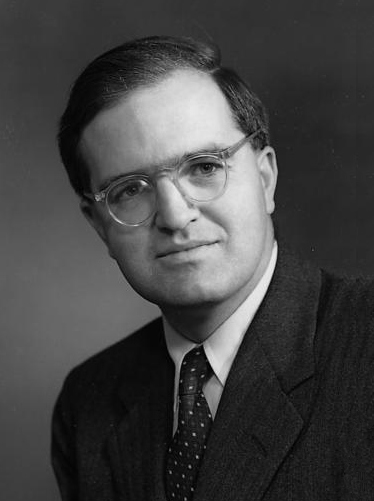
Aage Bohr
0 sources
Aage Bohr was born on June 19, 1922, in Copenhagen [1][2][3][4][5][6][7][8][9][10][11][12][13] and died on September 8, 2009, in Copenhagen [1][14][15][4][5][7][8][9][10][12][13][16]. A citizen of the Kingdom of Denmark [17][6], he worked as a physicist, pedagogue, and nuclear physicist [18][19][20][1][21]. He was the son of Niels Bohr [22][12] and received his education at the University of Copenhagen and Columbia University .
His career included employment at the University of Copenhagen, Los Alamos National Laboratory, the Nordic Institute for Theoretical Physics, and the University of Copenhagen Niels Bohr Institute [22]. Specializing in the field of nuclear physics , he held the position of full professor and authored the notable work Nuclear Structure [21]. His contributions were recognized with numerous awards, including the Atoms for Peace Award, the Nobel Prize in Physics, the John Price Wetherill Medal, the Rutherford Medal and Prize, the Dannie Heineman Prize for Mathematical Physics, and an honorary doctorate from Peking University [23][24][25][26][27][28][29][30][31].
Bohr was a member of the German Academy of Sciences Leopoldina, the Royal Swedish Academy of Sciences, the Pontifical Academy of Sciences, and the National Academy of Sciences [32][33]. He was buried at Mariebjerg Cemetery [5].
Key Facts
- Place of burial: Mariebjerg Cemetery[9]
- Father: Niels Bohr[10]
- Mother: Margrethe Bohr[11]
- Spouse: Marietta Soffer[12]
- Child: Tomas Bohr[13], Vilhelm A. Bohr[14]
- Country of citizenship: Kingdom of Denmark[15]
- Field of work: nuclear physics[16]
- Position held: full professor[17]
- Employer: University of Copenhagen[18], Los Alamos National Laboratory[19], Nordic Institute for Theoretical Physics[20], University of Copenhagen Niels Bohr Institute[21]
- Educated at: University of Copenhagen[22], Columbia University[23]
- Doctoral advisor: Niels Bohr[24]
- Notable work: Nuclear Structure[25]
- Award received: Atoms for Peace Award[26], Nobel Prize in Physics[27], John Price Wetherill Medal[28], Rutherford Medal and Prize[29], Dannie Heineman Prize for Mathematical Physics[30], honorary doctor of the Peking University[31], H. C. Ørsted Gold Medal[32], Ole Rømer Medal[33]
- Member of: German Academy of Sciences Leopoldina[34], Royal Swedish Academy of Sciences[35], Pontifical Academy of Sciences[36], National Academy of Sciences[37], Polish Academy of Sciences[38], American Academy of Arts and Sciences[39], American Philosophical Society[40]
- Sex or gender: male[41]
- Family: Bohr family[42]
- Commons category: Aage Bohr[43]
- Residence: Copenhagen[44]
- Family name: Bohr[45]
- Given name: Aage[46], Niels[47]
- Pseudonym: James Baker[48]
- Student of: Niels Bohr[49]
- Described by source: Physicists: Biographical Dictionary[50]
- Participant in: Manhattan Project[51]
- Nominated for: Nobel Prize in Physics[52]
Why It Matters
Aage Bohr has Wikipedia articles in 29 language editions, a strong signal of global cultural recognition.[53] He is known by 66 alternative names across languages and contexts.[54]
FAQs
Where was Aage Bohr born?
Aage Bohr's place of birth was Copenhagen[2].
Where did Aage Bohr die?
Aage Bohr died in Copenhagen[4].
Who were Aage Bohr's parents?
Aage Bohr's father was Niels Bohr[10]. Aage Bohr's mother was Margrethe Bohr[11].
Who was Aage Bohr married to?
Aage Bohr's spouses include Marietta Soffer[12].
What did Aage Bohr do for work?
Aage Bohr worked as a physicist[5], pedagogue[6], and nuclear physicist[7].
Where did Aage Bohr go to school?
Aage Bohr was educated at University of Copenhagen[22] and Columbia University[23].
What awards did Aage Bohr receive?
Honors received include Atoms for Peace Award[26], Nobel Prize in Physics[27], John Price Wetherill Medal[28], and Rutherford Medal and Prize[29].