
Oskava
village in Šumperk District of Olomouc region
Press Enter · cited answer in seconds
0 sources
Oskava
Summary
Oskava is a municipality of the Czech Republic[1]. Oskava has Wikipedia articles in 14 language editions, a strong signal of global cultural recognition.[2]
Key Facts
- Oskava is located in Šumperk District[3].
- Oskava is located in Q89194009[4].
- Oskava is in the country of Czech Republic[5].
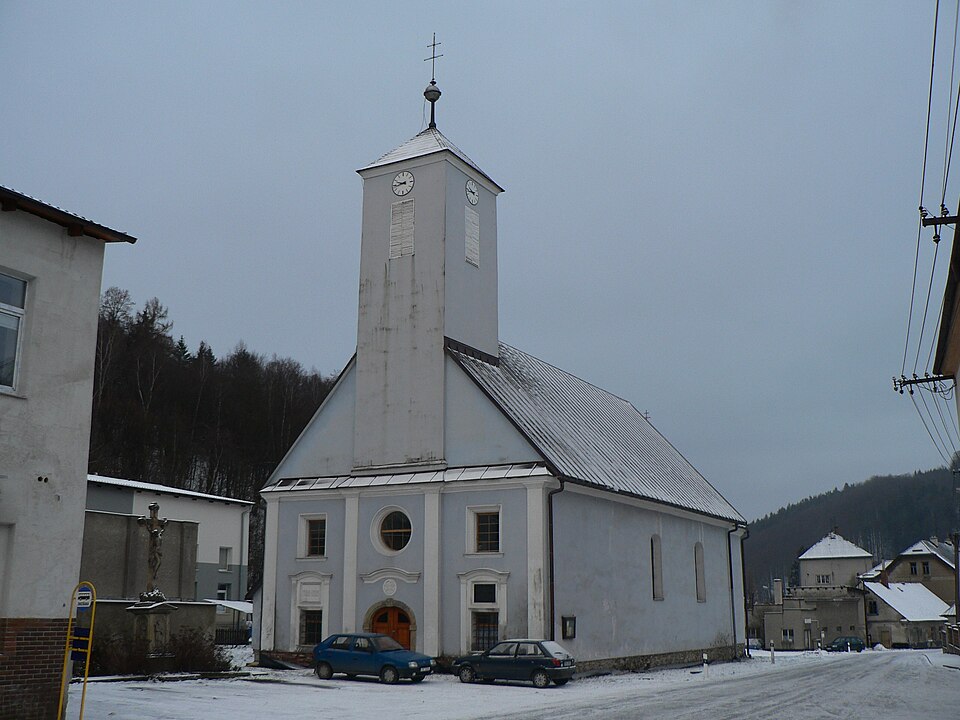
- Oskava's image is recorded as OskavaKostel.jpg[6].
- Oskava's instance of is recorded as municipality of the Czech Republic[7].
- Oskava's flag image is recorded as Oskava flag.gif[8].
- Oskava's shares border with is recorded as Libina[9].
- Oskava's shares border with is recorded as Stará Ves[10].
- Oskava's shares border with is recorded as Nový Malín[11].
- Oskava's shares border with is recorded as Šumvald[12].
- Oskava's shares border with is recorded as Horní Město[13].
- Oskava's shares border with is recorded as Tvrdkov[14].
- Oskava's shares border with is recorded as Hraběšice[15].
- Oskava's shares border with is recorded as Sobotín[16].
- Oskava's coat of arms image is recorded as Oskava CoA.jpg[17].
- Oskava's contains the administrative territorial entity is recorded as Bedřichov[18].
- Oskava's contains the administrative territorial entity is recorded as Mostkov[19].
- Oskava's contains the administrative territorial entity is recorded as Třemešek[20].
- Oskava's contains the administrative territorial entity is recorded as Q56413878[21].
- Oskava's postal code is recorded as 788 01[22].
- Oskava's Commons category is recorded as Oskava[23].
- Oskava's licence plate code is recorded as M[24].
- Oskava's OpenStreetMap relation ID is recorded as 438309[25].
- Oskava's coordinate location is recorded as {'lat': 49.895244173783, 'lon': 17.132196133305}[26].
- Oskava's Freebase ID is recorded as /m/076w64s[27].
Body
Identity
Oskava's official name is recorded as {'lang': 'cs', 'text': 'Oskava'}[28].
Why It Matters
Oskava has Wikipedia articles in 14 language editions, a strong signal of global cultural recognition.[2]