
Joshua
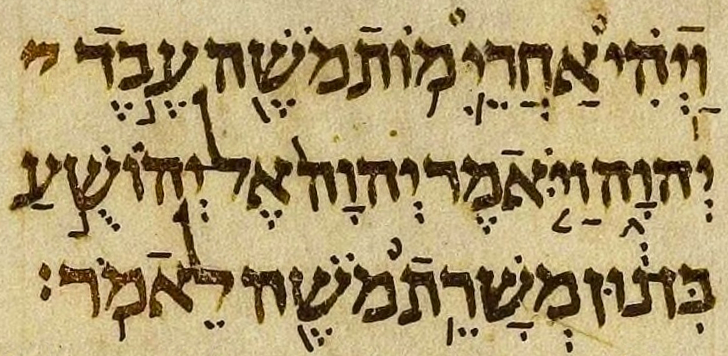
0 sources
Joshua
Summary
Joshua is a religious text[1]. Joshua draws 1,832 Wikipedia views per month (religious_text category, ranking #32 of 234).[2]
Key Facts
- Joshua's instance of is recorded as religious text[3].
- Joshua's instance of is recorded as book of the Bible[4].
- Joshua is named after Joshua[5].
- Joshua followed Deuteronomy[6].
- Joshua was followed by Judges[7].
- Joshua's part of the series is recorded as Nevi'im[8].
- Joshua is part of Tanakh[9].
- Joshua is part of Old Testament[10].
- Joshua is part of Septuagint[11].
- Joshua is part of Nevi'im[12].
- Joshua is part of Catholic Old Testament[13].
- Joshua is part of Historical books[14].
- Joshua is part of Hexateuch[15].
- Joshua's Commons category is recorded as Book of Joshua[16].
- Joshua's language of work or name is recorded as Biblical Hebrew[17].
- Joshua comprises Joshua 1[18].
- Joshua comprises Joshua 2[19].
- Joshua comprises Joshua 3[20].
- Joshua comprises Joshua 4[21].
- Joshua comprises Joshua 5[22].
- Joshua comprises Joshua 6[23].
- Joshua comprises Joshua 7[24].
- Joshua comprises Joshua 8[25].
- Joshua comprises Joshua 9[26].
- Joshua comprises Joshua 10[27].
Body
Publication
Joshua's language of work or name is recorded as Biblical Hebrew[17]. Part of include Tanakh[9], a biblical canon[28]; Old Testament[10], a literary work[29], written by various authors[30]; Septuagint[11], a version, edition or translation[31]; Nevi'im[12], a religious text[32]; Catholic Old Testament[13]; and Historical books[14], a religious text[33]. Joshua's part of the series is recorded as Nevi'im[8].
Subject and Themes
Joshua's part of the series is recorded as Nevi'im[8].
Adaptations and Inspiration
Joshua followed Deuteronomy[6]. Joshua was followed by Judges[7].
Why It Matters
Joshua draws 1,832 Wikipedia views per month (religious_text category, ranking #32 of 234).[2] Joshua has Wikipedia articles in 28 language editions, a strong signal of global cultural recognition.[34] Joshua is known by 29 alternative names across languages and contexts.[35]