
Cordelia
moon of Uranus
Press Enter · cited answer in seconds
0 sources
Cordelia
Summary
Cordelia is a moon of Uranus[1]. Cordelia draws 69 Wikipedia views per month (moon_of_uranus category, ranking #8 of 29).[2]
Key Facts
- Cordelia is credited with the discovery of Richard J. Terrile[3].
- Cordelia is credited with the discovery of Voyager 2[4].
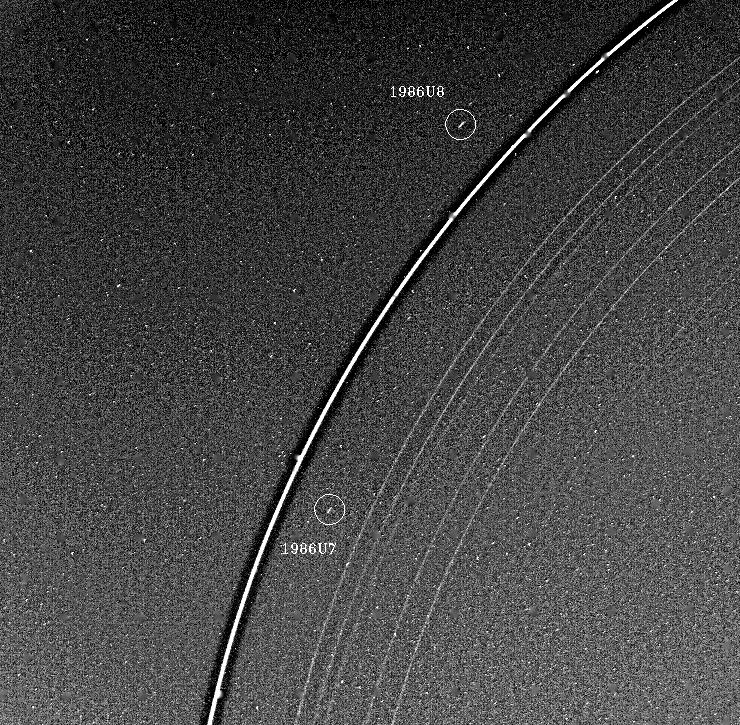
- Cordelia's image is recorded as Uranus rings and two moons.jpg[5].
- Cordelia's instance of is recorded as moon of Uranus[6].
- Cordelia's instance of is recorded as shepherd moon[7].
- Cordelia is named after Cordelia[8].
- Cordelia's Commons category is recorded as Cordelia (moon)[9].
- Cordelia's parent astronomical body is recorded as Uranus[10].
- Cordelia's provisional designation is recorded as S/1986 U 7[11].
- Cordelia's time of discovery or invention is recorded as +1986-01-20T00:00:00Z[12].
- Cordelia's Freebase ID is recorded as /m/0jvzp[13].
- Cordelia's orbital eccentricity is recorded as {'amount': '+0.00026'}[14].
- Cordelia's Encyclopædia Britannica Online ID is recorded as topic/Cordelia-satellite-of-Uranus[15].
- Cordelia's Getty Thesaurus of Geographic Names ID is recorded as 7031703[16].
- Cordelia's density is recorded as {'unit': 'Q13147228', 'amount': '+1.33'}[17].
- Cordelia's mass is recorded as {'unit': 'Q11570', 'amount': '+50000000000000000'}[18].
- Cordelia's mass is recorded as {'unit': 'Q2655272', 'amount': '+45'}[19].
- Cordelia's semi-major axis of an orbit is recorded as {'unit': 'Q828224', 'amount': '+49751.722'}[20].
- Cordelia's NAIF ID is recorded as 706[21].
- Cordelia's albedo is recorded as {'amount': '+0.07'}[22].
Body
Works and Contributions
Credited discoveries include Richard J. Terrile[3], an astronomer[23], b. 1951[24], of United States[25] and Voyager 2[4], a flyby probe[26].
Why It Matters
Cordelia draws 69 Wikipedia views per month (moon_of_uranus category, ranking #8 of 29).[2] Cordelia has Wikipedia articles in 27 language editions, a strong signal of global cultural recognition.[27] Cordelia is known by 9 alternative names across languages and contexts.[28]